1-888-502-0951
  • Formerra+ Login |
Contact Us
  • Products
    • Products
    • Polymers
    • High-Performance Polymers
    • Sustainable Solutions
    • Elastomers, Adhesives, Sealants
    • Chemistries
      • Chemistries
      • Acrylonitrile Butadiene Styrene (ABS)
      • PC/ABS Blends
      • Polycarbonate (PC)
      • Polyethylene (PE)
      • Polypropylene (PP)
    • Products Tap into our expert guidance and product range to uncover solutions that align with your specific application demands. Explore Solutions
  • Suppliers
    • Suppliers
    • AmSty
    • Avient
    • BASF
    • Celanese
    • Chevron Phillips
    • Covestro
    • Delrin
    • Dow
    • DuPont
    • Eastman
    • Evonik
    • GEON
    • H.B Fuller
    • INEOS
    • INEOS Styrolution
    • INVISTA
    • LyondellBasell
    • Nylene
    • Pinnacle Polymers
    • PMC Polymer Products
    • PureCycle
    • RheTech
    • Syensqo
    • Techmer PM
    • Trinseo
    • Westlake Chemical
    • Suppliers We partner with world-class suppliers to provide performance materials and expert support so you can choose with confidence. Find Suppliers
  • Industries
    • Industries
    • Healthcare
    • Outdoor & Powersports
    • Consumer​
    • Mobility
    • Packaging
    • Industrial
    • Electrical & Electronics
    • Building & Construction
    • Industries Supporting diverse industries with advanced materials and expert insight tailored to your specific application needs. View Industries
  • Capabilities
    • Capabilities
    • Technical Support
      • Technical Support
      • Material Selection
      • Process Development & Optimization
      • Training
      • Troubleshooting
    • Quality Compliance
      • Quality Compliance
      • REACH Compliance
    • Supply Chain Optimization
    • Capabilities Optimize production with Formerra’s expert support in technical guidance, supply chain solutions, and compliance. Learn More
  • Resources
    • Resources
    • Blog
    • Datasheets
    • Documentation
      • Documentation
      • ISO Certificate
      • ISCC Certificate
      • Terms and Conditions of Sale
      • W9 and Supporting Document
    • Line Cards
      • Line Cards
      • Supplier
      • High Performance Polymers
      • Sustainability
      • Automotive
      • Healthcare
      • Outdoor High Performance
    • Product Literature
    • Resources Your one-stop hub for blogs, line cards, certifications, brochures, and essential safety and technical documentation. Access Resources
  • About
    • About
    • Global Network
      • Global Network
      • Asia
      • Central America
      • Europe
      • North America
    • Value Chain
    • Careers
    • Leadership
    • Newsroom
    • About Formerra is a next-gen materials distributor empowering innovation through expertise, collaboration, and technical support. Our Story
  • Formerra+
    • Formerra+
    • Login
    • Register
    • Track Orders
    • Shop Products
    • Formerra+ Get 24/7 access to real-time pricing, product data, and fast ordering with a Formerra+ account. Shop Products
    • formerra
Contact Us

Polypropylene (PP)

Polypropylene (PP)

Material Category

Commodity

Typical Fillers / Reinforcements

Talc, calcium carbonate, glass fiber, mineral fillers, additives (impact, UV, FR, color)

Compatible Processes

Injection molding, Extrusion, Blow molding, 3D printing, Thermoforming, Fiber spinning

Regulatory

FDA 21 CFR 177.1520 (food contact), EC 1935/2004 and EU 10/2011 (food contact), USP Class VI, ISO 10993, RoHS, REACH

Find this polymer at Formerra+
Overview Performance Characteristics Strengths, Weaknesses, and Operating Limits Applications Key Industries Design, Assembly & Aesthetics Practical and Commercial Considerations Featured Products and Suppliers Frequently Asked Questions

Polypropylene Overview

Polypropylene is a thermoplastic polymer first commercially produced in the 1950s. It has become the second-most widely produced plastic globally, valued for its balance of mechanical strength, chemical resistance, and low cost. The material belongs to the polyolefin family and exhibits a semi-crystalline, non-polar structure that provides excellent resistance to moisture, fatigue, and most chemical environments. 

Polypropylene demonstrates excellent resistance to a broad range of chemicals at room temperature. The material resists non-oxidizing acids including hydrochloric, phosphoric, and sulfuric acid at moderate concentrations. Alkaline solutions, including sodium hydroxide and potassium hydroxide, do not attack polypropylene at typical operating temperatures. Most organic solvents, fats, and oils show little effect on the polymer, making it suitable for chemical storage and laboratory equipment. 

The material resists biological attack, remaining stable when exposed to bacteria, fungi, and most biological fluids. This resistance supports medical and pharmaceutical applications where sterilization and biological compatibility are required. 

Strong oxidizing agents pose the primary chemical limitation. Concentrated nitric acid, hydrogen peroxide at elevated concentrations, and halogenated solvents can degrade polypropylene. At elevated temperatures, nonpolar solvents such as xylene, toluene, and decalin can dissolve the polymer, limiting high-temperature chemical resistance. Aromatic hydrocarbons and chlorinated solvents should be avoided in polypropylene applications.
pyramid

Performance Characteristics

Mechanical Properties
Tensile strength

~25–50 MPa

Tensile modulus (Young’s)

~1,100–1,800 MPa (unfilled)

Flexural strength

~35–80 MPa (unfilled)

Flexural modulus

~1,200–1,800 MPa (unfilled)

Elongation at break

~50–700%

Notched Izod impact

~2–10 kJ/m² (unfilled)

Fatigue / endurance

1M cyc

Creep / stress relaxation

Moderate

Thermal Properties
Continuous use temperature

~80–100 °C (unfilled)

Heat deflection temperature

~50–110 °C at 1.8 MPa (unfilled)

Glass transition temperature (Tg)

−10 to 0 °C (amorphous)

Melting temperature

~130–170 °C

Coefficient of thermal expansion

~8–15 × 10⁻⁵ /K (unfilled)

Thermal conductivity

~0.1–0.25 W/m·K

Operating Environment
Water absorption

<0.03% in 24 h

Chemical resistance summary

Very good resistance to water, aqueous salts, most aliphatic hydrocarbons, oils and fuels; poor against strong oxidizing acids, halogenated hydrocarbons, and aromatic solvents at elevated temperature.

UV/weatherability rating

Poor to fair without stabilizers

Hydrolysis resistance

Excellent

Stress cracking sensitivity

Generally low

Electrical Properties
Dielectric strength

20–40 kV/mm

Dielectric constant

~2.1–2.3 at 0.1–1 MHz.

Volume resistivity

≥10¹⁵ Ω·cm

Surface resistivity

≥10¹³–10¹⁵ Ω/sq

ESD/antistatic behavior

Base PP is insulating; can reach surface resistivity in the ~10⁶–10¹¹ Ω/sq range with additives

Flammability
UL 94 class

HB / V2 / V0

Glow wire / other fire tests

FR grades 750–960 °C glow wire requirements

Smoke/toxicity

PP combustion mainly yields CO₂, CO, water, and soot; smoke/toxicity strongly influenced by FR or additive package

Tribological Properties
Coefficient of friction

~0.25–0.35 static, ~0.2–0.3 dynamic for unfilled PP.

Wear resistance / bearing suitability

Good abrasion resistance and low friction versus many plastics, suitable for lightload, lowspeed bearings and sliding elements; performance improves further in filled/modified “bearing grade” PP compounds

Strengths, Weaknesses & Operating Limits

Key Strengths

  • Low Density and Light Weight: The low specific gravity enables weight reduction in automotive and consumer products, reducing material costs and shipping expenses while maintaining adequate mechanical performance. 
  • Chemical Resistance: Broad resistance to acids, bases, and solvents supports chemical processing equipment, laboratory ware, and pharmaceutical packaging applications. 
  • Fatigue Resistance: Exceptional performance under repeated flexing enables living hinge designs and applications requiring millions of flex cycles without failure. 
  • Moisture Resistance: Negligible water absorption maintains dimensional stability and eliminates the need for drying before processing. 
  • Cost Effectiveness: Polypropylene ranks among the most economical engineering thermoplastics, offering an attractive balance of properties and price for high-volume applications. 
  • Processability: The material processes easily through injection molding, extrusion, blow molding, and thermoforming, with fast cycle times and minimal scrap generation.

Known Weaknesses

  • UV Degradation: Unprotected polypropylene degrades rapidly under sunlight exposure. UV stabilizers are required for outdoor applications. 
  • Low Temperature Brittleness: Impact strength decreases significantly below 0°C, limiting winter outdoor use unless impact-modified grades are specified. 
  • Limited High Temperature Performance: Heat deflection temperatures restrict use in high-temperature structural applications compared to engineering thermoplastics like nylon or polycarbonate. 
  • Oxidation Susceptibility: Strong oxidizing chemicals and prolonged thermal exposure can cause property degradation. Antioxidant stabilizers extend service life. 
  • High Thermal Expansion: Significant dimensional changes across temperature ranges require careful design consideration in precision assemblies. 
  • Bonding Challenges: The low surface energy of polypropylene makes adhesive bonding difficult. Surface treatments or mechanical fastening are typically required for assembly.

Operating limits

  • Operating temperature envelope:  roughly −20 to 80–100 °C for continuous use; highheat/reinforced grades can reach ~110–120 °C continuous, shortterm higher. 
  • Load/time limits: for longterm static loading (≈10,000 h), design stresses are usually kept to a small fraction of tensile strength, on the order of a few MPa, strongly grade and temperaturedependent 
  • Processing constraints: generally no drying needed; melt window ~200–260 °C; semi‑crystalline shrinkage makes it warpage-prone in thick/uneven sections; sensitive to over-heating and long residence times (oxidative degradation).

Applications

Typical Applications

  • Appliance housings & panels
  • Automotive bumper fascia & exterior trim
  • Automotive interior trim components
  • Caps & closures
  • Centrifuge tubes
  • Chemical storage tanks & liners
  • Diagnostic test cassettes & cartridges
  • Disposable syringes
  • Food storage containers
  • General laboratory bottles & flasks
  • Household storage bins & organizers
  • IV components (e.g., hubs, drip chambers)
  • Packaging films & wraps
  • Petri dishes & culture plates
  • Pipes & fittings
  • Pipette tips
  • Single use medical device housings

Niche Applications

  • Living hinges (flip top caps)
  • Battery cases
  • Medical device housings
  • Lightweight automotive under hood components
  • Dishwasher safe reusable containers
  • Acid/alkali resistant ducting & scrubber internals
  • Laboratory fume hood components
  • Corrosion resistant pump & valve parts

Key Industries

Healthcare

Mobility

Packaging

Outdoor & Powersports

Industrial

Consumer

Building & Construction

Electrical & Electronics

Design, Assembly & Aesthetics

Surface finish capability: Medium gloss; replicates fine textures well; shows weld lines and flow marks 

Sink/warpage/visible defects tendency: Prone to sink marks and warpage due to high shrinkage; worse in thick sections 

Colorability: All colors achievable via masterbatch; bright/dark good, white excellent; typically opaque, some translucency in thin copolymer 

Color stability: Fair; UV stabilizers needed to prevent yellowing/chalking; heat can cause discoloration if overheated 

Optical properties: Opaque (semi-crystalline); high haze even in thin sections; refractive index ~1.49 

Scratch/chemical mar resistance notes: Fair scratch resistance; good against mild chemicals/oils, poor vs. solvents/aromatics 

Marking methods: Pad print, inkjet, hot stamping good; laser marking possible on filled grades; embossing clean. 

Coating/painting/plating suitability: Paintable with pretreatment (flame/plasma); plating rare, needs special adhesion promoter 

Joining methods: Ultrasonic/vibration welding excellent; laser welding good on compatible grades; adhesives fair (surface prep needed); clean joints possible
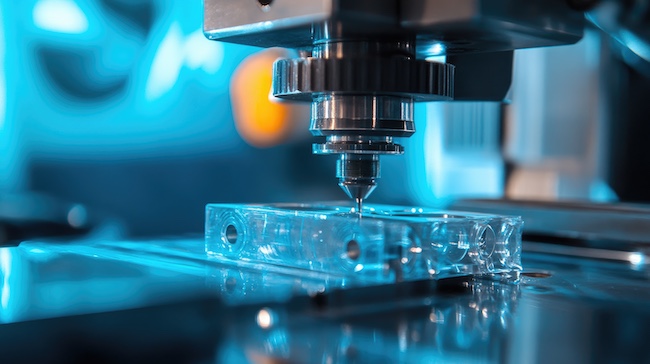

Polypropylene plastic machining process with precision cutting tool shaping a transparent polymer block, demonstrating versatile thermoplastic used in manufacturing and medical devices.

Practical & Commercial Considerations

Processing equipment fit

Standard injection/extrusion machines; general-purpose screws; standard molds; hot runners work well (low shear)

Cycle time / productivity notes

Fast cycles due to low melt viscosity and rapid crystallization; among quickest for semi-crystalline thermoplastics

Shrinkage

1.5–2.5% flow direction; 1.8–3.0% transverse; anisotropic and grade dependent

Dimensional stability / tolerance capability

Good after crystallization stabilizes; moderate tolerance (±0.2–0.5%); fillers improve precision

Featured

Suppliers and Products

Celanese logo

Omnipro®

View Products
formerra logo

Verity™

View Products
ineos logo

Ineos®

View Products
invista logo

Invista™

View Products
image

Hifax®

View Products
image

Hostacom®

View Products
image

Metocene®

View Products
image

Pro-fax®

View Products
image

Softell®

View Products
Pinnacle Polymers logo

Pinnacle™

View Products
Geon logo

Geon

View Products
PureCycle​ logo

PureFive™

View Products

Frequently Asked Questions

What is polypropylene and how is it made?

Polypropylene is a thermoplastic polymer produced through the polymerization of propylene monomers using catalysts. The stereospecific polymerization process, developed by Giulio Natta in the 1950s, creates isotactic polypropylene with regular molecular structure and semicrystalline morphology. Modern production uses Ziegler-Natta or metallocene catalysts in continuous polymerization reactors operating at controlled temperature and pressure conditions.

What are the main types of polypropylene?

Homopolymer polypropylene contains only propylene monomers, providing maximum stiffness and heat resistance. Random copolymers incorporate small amounts of ethylene distributed randomly along the polymer chain, improving clarity and low-temperature impact. Block copolymers contain segments of polypropylene alternating with ethylene-propylene rubber, delivering enhanced impact strength while maintaining reasonable stiffness. 

Is polypropylene safe for food contact?

Food-grade polypropylene meets FDA requirements for food contact applications and is widely used in food packaging, containers, and food service items. The material does not leach harmful substances under normal use conditions and withstands microwave heating and dishwasher temperatures. Specific grades are formulated and tested for food contact compliance.

How does polypropylene compare to polyethylene?

Polypropylene offers higher stiffness, better heat resistance, and superior chemical resistance compared to polyethylene. The material's higher melting point enables steam sterilization and hot-fill applications where polyethylene would deform. Polypropylene is lighter than polyethylene and provides better fatigue resistance for living hinge applications. Polyethylene offers better low-temperature toughness and lower cost for less demanding applications.

Can polypropylene be recycled?

Polypropylene is recyclable and carries recycling code 5. Post-consumer recycled material finds applications in automotive parts, industrial products, and non-food packaging. Recycling requires sorting, cleaning, and reprocessing through extrusion or compounding. Material properties may degrade slightly through recycling, but proper processing maintains acceptable performance for many applications.

Connect with Our Experts Today

If you need some extra guidance in finding the right product, fill out the form and our team will be in touch shortly.

Contact Us

Browse and Order Products on Formerra+

Explore Our Products on Formerra+ Discover the full range of high-quality products on the upgraded Formerra+ online experience.

Visit Formerra+

Sources

BMP Medical. "Best Types of Plastic for Medical Equipment or Devices." June 2025. https://bmpmedical.com/what-plastics-are-used-in-medical-devices/ 

Braskem S.A. "Polypropylene Chemical Resistance." Technical Literature, December 2005. https://www.braskem.com.br/Portal/Principal/Arquivos/html/boletm_tecnico/PP%20Chemical%20Resistance.pdf 

Engineering ToolBox. "PP Polypropylene - Chemical Resistance." April 2024. https://www.engineeringtoolbox.com/polypropylene-pp-chemical-resistance-d_435.html 

International Polymer Solutions. "Polypropylene Typical Properties." Technical Bulletin. https://www.ipolymer.com/pdf/Polypropylene.pdf 

MatWeb. "Heat Deflection Temperature Testing of Plastics." Material Property Data. https://www.matweb.com/reference/deflection-temperature.aspx 

Palmetto Industries – Polypropylene Properties (https://www.palmetto-industries.com/polypropylene-properties/) 

PMC - PubMed Central. "Research and application of polypropylene: a review." https://pmc.ncbi.nlm.nih.gov/articles/PMC10761633/ 

Protolabs. "Polypropylene (PP): Understand the Key Benefits and Applications." Materials Guide. https://www.protolabs.com/materials/polypropylene/ 

SpecialChem – Polypropylene Guide (https://www.specialchem.com/plastics/guide/polypropylene-pp-plastic) 

SyBridge Technologies. "Know Your Materials: Polypropylene (PP)." https://sybridge.com/know-your-materials-polypropylene/ 

Formerra
Contact Us View Suppliers
  • About
    • Careers
    • Leadership
    • Newsroom
  • Resources
    • Blog
    • Datasheets
  • Formerra+
    • Login
    • Register
    • Shop Products
Linkedin

Sitemap |  Privacy Policy |  Terms and Conditions of Sale |  Website Legal Disclaimer