1-888-502-0951
  • Formerra+ Login |
Contact Us
  • Products
    • Products
    • Polymers
    • High-Performance Polymers
    • Sustainable Solutions
    • Elastomers, Adhesives, Sealants
    • Chemistries
      • Chemistries
      • Acrylonitrile Butadiene Styrene (ABS)
      • PC/ABS Blends
      • Polycarbonate (PC)
      • Polyethylene (PE)
      • Polypropylene (PP)
    • Products Tap into our expert guidance and product range to uncover solutions that align with your specific application demands. Explore Solutions
  • Suppliers
    • Suppliers
    • AmSty
    • Avient
    • BASF
    • Celanese
    • Chevron Phillips
    • Covestro
    • Delrin
    • Dow
    • DuPont
    • Eastman
    • Evonik
    • GEON
    • H.B Fuller
    • INEOS
    • INEOS Styrolution
    • INVISTA
    • LyondellBasell
    • Nylene
    • Pinnacle Polymers
    • PMC Polymer Products
    • PureCycle
    • RheTech
    • Syensqo
    • Techmer PM
    • Trinseo
    • Westlake Chemical
    • Suppliers We partner with world-class suppliers to provide performance materials and expert support so you can choose with confidence. Find Suppliers
  • Industries
    • Industries
    • Healthcare
    • Outdoor & Powersports
    • Consumer​
    • Mobility
    • Packaging
    • Industrial
    • Electrical & Electronics
    • Building & Construction
    • Industries Supporting diverse industries with advanced materials and expert insight tailored to your specific application needs. View Industries
  • Capabilities
    • Capabilities
    • Technical Support
      • Technical Support
      • Material Selection
      • Process Development & Optimization
      • Training
      • Troubleshooting
    • Quality Compliance
      • Quality Compliance
      • REACH Compliance
    • Supply Chain Optimization
    • Capabilities Optimize production with Formerra’s expert support in technical guidance, supply chain solutions, and compliance. Learn More
  • Resources
    • Resources
    • Blog
    • Datasheets
    • Documentation
      • Documentation
      • ISO Certificate
      • ISCC Certificate
      • Terms and Conditions of Sale
      • W9 and Supporting Document
    • Line Cards
      • Line Cards
      • Supplier
      • High Performance Polymers
      • Sustainability
      • Automotive
      • Healthcare
      • Outdoor High Performance
    • Product Literature
    • Resources Your one-stop hub for blogs, line cards, certifications, brochures, and essential safety and technical documentation. Access Resources
  • About
    • About
    • Global Network
      • Global Network
      • Asia
      • Central America
      • Europe
      • North America
    • Value Chain
    • Careers
    • Leadership
    • Newsroom
    • About Formerra is a next-gen materials distributor empowering innovation through expertise, collaboration, and technical support. Our Story
  • Formerra+
    • Formerra+
    • Login
    • Register
    • Track Orders
    • Shop Products
    • Formerra+ Get 24/7 access to real-time pricing, product data, and fast ordering with a Formerra+ account. Shop Products
    • formerra
Contact Us

Acrylonitrile Butadiene Styrene (ABS)

Acrylonitrile Butadiene Styrene (ABS)

Material Category

Engineering Thermoplastic

Typical Fillers / Reinforcements

Glass fiber (10-30%), flame retardants (brominated, phosphorus-based, halogen-free), impact modifiers, mineral fillers, carbon black, colorants, UV stabilizers, heat stabilizers

Compatible Processes

Injection molding, Extrusion (sheet, profile, pipe), Blow molding, Thermoforming, 3D printing (FDM)

Regulatory

UL94 (flame ratings), RoHS, REACH, NSF 61 (potable water contact), limited food contact grades available

Find this polymer at Formerra+
Overview Performance Characteristics Strengths, Weaknesses & Operating Limits Applications Key Industries Design, Assembly & Aesthetics Practical & Commercial Considerations Featured Products and Suppliers Frequently Asked Questions

ABS Overview

Acrylonitrile butadiene styrene (ABS) is a widely used engineering thermoplastic known for exceptional impact resistance, toughness, and rigidity. First commercialized in the 1950s, ABS resin has become essential for applications requiring durable, easy-to-process materials with excellent surface finish.  

As an ABS resin supplier, Formerra provides access to multiple ABS grades optimized for automotive, electronics, appliances, and consumer product applications. 

ABS is a terpolymer combining three monomers: acrylonitrile (providing chemical resistance and heat stability), butadiene (delivering impact resistance and toughness), and styrene (contributing rigidity and processability). The ratio of these components varies by grade, allowing abs plastics to be tailored for specific performance requirements.  

Available in various formulations including general-purpose, high-impact, heat-resistant, flame-retardant, and plating grades, ABS features high impact resistance. The butadiene rubber phase dispersed throughout the rigid styrene-acrylonitrile matrix absorbs impact energy, preventing brittle failure. This toughness persists across a wide temperature range, making abs resin plastic suitable for applications subject to mechanical shock, drop impact, and repeated stress cycles. 

Surface finish quality is another key strength. ABS plastic resin produces parts with excellent gloss and smooth surfaces directly from the mold. The material accepts paint, plating, and metallization without extensive surface preparation.  

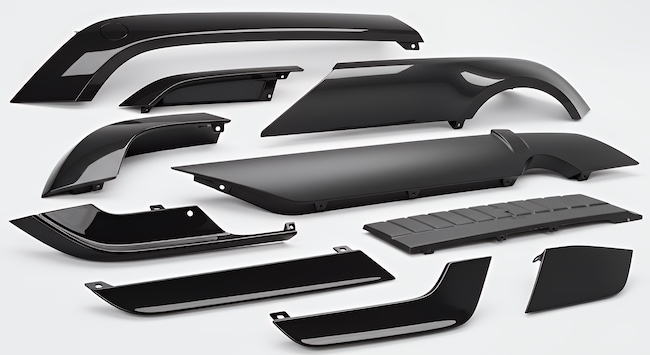
Chrome-plated ABS components are common in automotive trim, plumbing fixtures, and decorative applications where metallic appearance is desired at lower cost than metal fabrication. 

Dimensional stability supports tight tolerances and consistent part geometry. ABS resin material exhibits relatively low shrinkage (0.4-0.7%) and uniform shrinkage patterns due to its amorphous structure. This predictability simplifies mold design and reduces warpage in complex geometries. The combination of dimensional stability and good surface finish enables snap-fit assemblies and integrated features. 

Processing versatility makes ABS accessible across multiple manufacturing methods. ABS plastic pellets process efficiently through injection molding, extrusion, blow molding, and thermoforming. The material flows well at moderate temperatures (200-250 °C), fills thin sections completely, and releases cleanly from molds. Fast cycle times and minimal scrap generation support high-volume production economics. 

Chemical resistance covers common household chemicals, oils, and aqueous solutions. ABS resists dilute acids, alkalis, alcohols, and mineral oils at room temperature. This resistance supports applications in consumer products, appliances, and plumbing fixtures exposed to cleaning agents and typical use environments. Material selection must consider exposure to aromatic solvents and strong oxidizing agents, which can attack ABS.

pyramid

Performance Characteristics

Mechanical Properties

Mechanical Properties

Tensile strength

40-55 MPa (unfilled), 60-110 MPa (glass-filled)

Tensile modulus

1,800-2,900 MPa (unfilled), 5,000-9,000 MPa (glass-filled)

Flexural strength

60-90 MPa (unfilled), 100-170 MPa (glass-filled) 

Flexural modulus

2,000-2,800 MPa (unfilled), 5,500-8,500 MPa (glass-filled)

Elongation at break

10-50% (unfilled, grade dependent), 2-5% (glass-filled)

Notched Izod impact

150-400 J/m (unfilled, high-impact grades), 50-120 J/m (glass-filled)

Hardness (Rockwell)

R90-115

Creep / stress relaxation

Moderate

Thermal Properties

Thermal Properties

Continuous use temperature

70-90 °C (unfilled), 90-105 °C (heat-stabilized grades)

Heat deflection temperature

88-110 °C at 0.46 MPa (unfilled), 95-115 °C at 1.8 MPa

Glass transition temperature (Tg)

105-115 °C

Melting temperature

None (amorphous polymer)

Processing temperature range

200-250 °C

Coefficient of linear thermal expansion

70-100 x 10⁻⁶/°C (unfilled), 30-50 x 10⁻⁶/°C (glass-filled) 

Thermal conductivity

0.17-0.25 W/(m·K)

Operating Environment

Operating Environment

Water absorption

0.2-0.4% in 24 hours at 23 °C. Moisture absorption at saturation reaches 0.8-1.0%. Water uptake causes minor dimensional changes and reduces mechanical properties slightly. 

Chemical resistance summary

Excellent resistance to dilute acids, alkalis, alcohols, mineral oils, greases, and aqueous salt solutions at room temperature. Good resistance to vegetable oils and fats. Limited resistance to aromatic hydrocarbons, esters, ketones, and chlorinated solvents. Poor resistance to concentrated acids, strong oxidizing agents, and UV radiation. ABS resin from ABS resin suppliers shows better chemical resistance than polystyrene but inferior to polyolefins.

UV/weatherability rating

Poor. Unprotected abs plastics degrade rapidly under UV exposure, causing yellowing, chalking, embrittlement, and property loss. UV stabilizers improve but do not eliminate degradation. ABS is not recommended for long-term outdoor applications without protective coatings or UV-absorbing topcoats.

Hydrolysis resistance

Good at room temperature. Prolonged exposure to hot water above 80 °C can cause property degradation. Steam sterilization is generally not recommended for standard ABS grades.

Stress cracking sensitivity

Moderate to high when exposed to organic solvents, oils, and cleaning agents under load. Aromatic hydrocarbons, ketones, and esters cause rapid stress cracking. Design must minimize sustained stress in chemically aggressive environments.

Electrical Properties

Electrical Properties

Dielectric strength

15-20 kV/mm

Dielectric constant (1 MHz)

2.8-3.2

Volume resistivity

10¹⁴-10¹⁶ ohm·cm

Surface resistivity

10¹³-10¹⁵ ohm/sq

ESD/antistatic behavior

Base ABS is insulating. Permanent and dissipative ESD grades available with conductive additives for electronics applications.

Flammability

Flammability

UL 94 class

HB (unfilled), V-2 to V-0 with flame retardant additives

Combustion temperature

Typically above 380-400 °C

Smoke/toxicity

ABS combustion produces CO₂, CO, water, soot, and potentially toxic gases from acrylonitrile monomer. Smoke density and toxicity depend on additives and flame retardant packages.

Tribological Properties

Tribological Properties

Coefficient of friction

0.4-0.5 static, 0.3-0.4 dynamic

Wear resistance / bearing suitability

Moderate wear resistance. Not typically used for high-load bearing applications. Suitable for light-duty sliding contacts and low-friction surfaces.

Strengths, Weaknesses & Operating Limits

Key Strengths

  • Impact Resistance: Exceptional toughness across a wide temperature range makes ABS resin material ideal for applications requiring resistance to mechanical shock, drop impact, and repeated stress. The butadiene rubber phase dispersed in the rigid matrix absorbs impact energy effectively, preventing brittle failure in consumer products, automotive components, and appliance housings. 
  • Surface Finish Quality: Excellent gloss and smooth surfaces directly from the mold eliminate secondary finishing operations. Plastics ABS accept paint, metallization, and chrome plating without extensive surface preparation, enabling decorative applications in automotive trim, plumbing fixtures, and consumer electronics at lower cost than metal alternatives. 
  • Dimensional Stability: Relatively low shrinkage (0.4-0.7%) and uniform shrinkage patterns due to amorphous structure simplify mold design and reduce warpage. This predictability enables tight tolerances, snap-fit assemblies, and integrated features in complex geometries for electronics housings and precision components. 
  • Ease of Processing: ABS pellets process efficiently through injection molding, extrusion, and thermoforming at moderate temperatures (200-250 °C). Good flow properties fill thin sections completely. Fast cycle times and minimal scrap generation support high-volume production economics. The material releases cleanly from molds without sticking. 
  • Cost-Effectiveness: Competitive pricing relative to other engineering thermoplastics delivers favorable property-to-cost ratio. The combination of toughness, processability, and surface finish quality at moderate cost makes abs resin supplier offerings attractive for high-volume consumer and automotive applications. 
  • Design Versatility: ABS supports complex geometries, thin walls, living hinges, and integrated snap features. Multiple grade options (general-purpose, high-impact, heat-resistant, flame-retardant, plating) allow material selection tailored to specific application requirements and performance targets. 


Known Weaknesses

  • UV Degradation: Severe degradation under prolonged UV exposure causes yellowing, chalking, embrittlement, and property loss. UV stabilizers improve but do not eliminate degradation. ABS plastic resin is not suitable for long-term outdoor applications without protective coatings, making material selection critical for exterior components. 
  • Limited Heat Resistance: Continuous use temperatures of 70-90 °C restrict applications in high-temperature environments. Heat deflection temperatures of 88-110 °C are adequate for consumer products but insufficient for automotive under-hood or industrial applications requiring sustained exposure above 100 °C. 
  • Chemical Sensitivity: Limited resistance to aromatic hydrocarbons, ketones, esters, and chlorinated solvents causes stress cracking under load. Exposure to organic solvents, cleaning agents, and industrial chemicals can compromise structural integrity, requiring careful material evaluation for chemically aggressive environments. 
  • Flammability: Standard ABS grades burn readily and carry HB flammability rating. Flame-retardant formulations achieve V-2 or V-0 ratings but increase cost and may reduce impact strength. Smoke generation during combustion produces potentially toxic gases, limiting use in applications requiring stringent fire safety standards. 
  • Poor Weatherability: Outdoor exposure without UV protection causes rapid property degradation. Even UV-stabilized grades show gradual yellowing and embrittlement over extended outdoor service, making ABS unsuitable for architectural and long-term exterior applications without protective topcoats. 
  • Lower Strength Than Reinforced Grades: Unfilled ABS offers moderate strength and stiffness compared to glass-filled engineering thermoplastics. Applications requiring high load-bearing capacity or structural rigidity may need glass-reinforced ABS or alternative materials like polycarbonate or nylon. 

Operating Limits

  • Operating temperature envelope: Continuous use temperature 70-90 °C for unfilled grades, 90-105 °C for heat-stabilized formulations. Short-term exposure to 100-110 °C acceptable for most grades. Low-temperature performance extends to -40 °C without brittle failure for high-impact grades. Elevated temperatures above 90 °C cause creep, stress relaxation, and property degradation over time. 
  • Load/time limits: Design stresses should remain below 25-35% of ultimate tensile strength for long-term static loading due to creep. Stress relaxation is significant at elevated temperatures and under constant strain. Glass-filled grades offer improved creep resistance but reduced impact strength and ductility. 
  • Processing constraints: ABS plastic pellets require drying to <0.1% moisture before processing at 200-250 °C to prevent surface defects and reduced properties. Moderate injection pressures (60-100 MPa) sufficient for most applications. Residence time should be minimized to prevent thermal degradation. Mold temperatures of 50-80 °C produce optimal surface finish and dimensional stability. 

Applications

Typical Applications

  • Automotive interior trim & consoles
  • Automotive exterior trim & grilles
  • Electronic device housings
  • Appliance housings & control panels
  • Consumer goods housings & components
  • Durable toys & building blocks
  • Plumbing fixtures & pipe fittings
  • Electrical boxes & conduit fittings
  • Office equipment housings
  • Musical instrument components & cases

Niche Applications

  • 3D printing filament for prototypes & parts
  • Medical device housings
  • Non-implantable diagnostic equipment
  • Refrigerator liners & door components
  • Motorcycle helmets & protective shells
  • Boat hulls
  • Marine interior components
  • Golf club heads
  • Sporting equipment requiring impact resistance
  • Protective electronic cases & enclosures
  • Bathroom fixtures & accessories
  • Vending machine panels & coin mechanisms
  • Architectural models & scale prototypes

Key Industries

Healthcare

Mobility

Outdoor & Powersports

Electrical & Electronics

Consumer

Building & Construction

Design, Assembly & Aesthetics

Surface finish capability: Excellent high-gloss finish achievable directly from mold. Opaque or translucent depending on formulation. Replicates fine textures and patterns. Flow lines minimized with proper gate location and processing. Weld lines visible but can be managed through design. 

Sink/warpage/visible defects tendency: Minimal sink marks due to amorphous structure and moderate shrinkage. Warpage risk increases with uneven wall thickness and inadequate cooling. Gate location and cooling design critical for dimensional accuracy. Proper processing minimizes visible defects. 

Colorability: Excellent color range via masterbatch or pre-colored compounds. Deep, vibrant colors achievable. Natural ABS is typically ivory to beige. Bright colors and pastels well-supported. Metallic and pearlescent effects possible with special pigments. 

Color stability: Good indoors with UV stabilization. Poor outdoors without protection. Prolonged UV exposure causes yellowing even with stabilizers. Heat-stable pigments required to prevent discoloration during processing at 200-250 °C. 

Optical properties: Naturally opaque. Translucent grades available but not truly transparent. Refractive index approximately 1.54. Good light diffusion properties for lighting applications. Internal stress does not cause optical distortion like polycarbonate. 

Scratch/chemical mar resistance notes: Moderate scratch resistance. Hard-coat treatments improve surface durability. Good resistance to mild household chemicals. Attacked by aromatic solvents, ketones, and esters. Stress cracking occurs with solvent exposure under load. 

Marking methods: Pad printing, hot stamping, inkjet printing, and screen printing all effective. Laser marking produces permanent marks on most grades. Embossing and debossing produce clean, durable features. 

Coating/painting/plating suitability: Excellent paint adhesion without extensive surface preparation. Chrome plating widely used for decorative automotive and plumbing applications. Metallization and vacuum deposition produce metallic finishes. Special plating-grade ABS formulations optimize adhesion. 

Joining methods: Ultrasonic welding excellent for ABS-to-ABS joints. Solvent bonding with acetone or MEK produces strong, permanent bonds. Adhesive bonding works well with cyanoacrylate and epoxy. Mechanical fastening with bosses and snap-fits common. Heat staking and spin welding also effective. 

Polycarbonate plastic injection molding process with transparent pellets and formed parts, highlighting high-impact thermoplastic used in engineering and medical applications.

Practical & Commercial Considerations

Processing equipment fit

Standard injection molding, extrusion, and blow molding equipment suitable. ABS resin pellets process on general-purpose screws with compression ratio of 2.5:1 to 3.5:1 and L/D ratio of 18:1 to 22:1. Moderate injection pressures (60-100 MPa) sufficient. Hot runner systems reduce waste in high-volume production. Drying equipment recommended to achieve <0.1% moisture content.


Cycle time / productivity notes

Fast cycle times due to moderate processing temperatures (200-250 °C) and rapid cooling. Among the quickest processing engineering thermoplastics for high-volume production. Thin-wall applications benefit from excellent flow properties and short fill times.

Drying requirements

ABS plastic pellets absorb moisture and require drying before processing. Dry at 80-90 °C for 2-4 hours in a dehumidifying dryer to reach moisture content below 0.1%. Regrind requires similar drying. Material exposed to ambient conditions absorbs moisture rapidly and must be redried. Failure to dry adequately causes splay marks, surface defects, and reduced properties.

Melt and mold temperature guidance

Processing temperatures range from 200-250 °C depending on grade and part geometry. Thin-wall parts require higher temperatures (230-250 °C) for proper flow. Thick sections process at lower temperatures (200-220 °C) to minimize degradation. Mold temperatures of 50-80 °C produce optimal surface finish and dimensional stability. Higher mold temperatures improve surface gloss but extend cycle times.

Shrinkage

0.4-0.7% for unfilled abs resin, 0.2-0.5% for glass-filled grades. Relatively uniform shrinkage due to amorphous structure with minimal flow versus transverse direction differences. Less anisotropic than semi-crystalline polymers, simplifying mold design.

Dimensional stability / tolerance capability

Good dimensional stability with tight tolerances achievable (±0.2-0.4% with proper mold design and process control). Glass-filled grades offer superior precision. Water absorption causes minor dimensional changes (0.1-0.2%) in high-humidity environments. Post-mold shrinkage stabilizes within 24-48 hours.

Regrind and scrap utilization

ABS resin supplier recommendations typically allow regrind ratios of 15-30% mixed with virgin material depending on application requirements. Higher regrind percentages cause property degradation due to thermal history. Plating applications limit regrind to 10-15% to maintain surface quality. Regrind must be dried thoroughly and free from contamination.

Featured

Products and Suppliers

image

Clearblend®

View Products
image

Lustran®

View Products
image

Novodur®

View Products
image

Novodur® Ultra

View Products
image

Terluran®

View Products
Trinseo

Magnum™

View Products

Frequently Asked Questions

What makes ABS different from other chemistries?

ABS combines the impact resistance of rubber-modified polymers with the rigidity and surface quality of styrenic plastics. The terpolymer structure delivers toughness far exceeding polystyrene (PS) while maintaining better surface finish and dimensional stability than polyethylene (PE) or polypropylene (PP). ABS resin material offers 5-10 times the impact strength of unmodified polystyrene and superior rigidity compared to polyethylene at similar densities. The material accepts paint, plating, and metallization without extensive surface preparation, enabling decorative applications impossible with polyolefins. Processing temperatures of 200-250 °C fall between commodity thermoplastics like PE/PP (160-260 °C) and engineering polymers like polycarbonate (280-320 °C). This balance of properties, surface quality, and moderate cost makes ABS the material of choice for consumer products, appliances, and automotive applications requiring toughness with aesthetic appeal.

Is ABS suitable for outdoor applications?

ABS demonstrates poor weatherability and is generally not recommended for long-term outdoor exposure without protective measures. Unprotected abs plastics degrade rapidly under UV radiation, causing yellowing, chalking, surface embrittlement, and mechanical property loss within months of outdoor exposure. UV stabilizers improve performance but do not eliminate degradation. Even UV-stabilized grades show visible yellowing and property degradation after 1-2 years of outdoor service. Applications requiring outdoor durability should consider protective topcoats, painted finishes, or alternative materials like ASA (acrylonitrile styrene acrylate), which offers similar processing and properties with superior UV resistance. Indoor applications with limited UV exposure from fluorescent lighting or windows show excellent long-term performance. Short-term outdoor exposure during shipping and storage generally does not compromise performance.

Can ABS be plated or painted?

ABS accepts electroplating, painting, and metallization exceptionally well, making it the preferred substrate for chrome-plated automotive trim, plumbing fixtures, and decorative components. Electroless nickel plating followed by decorative chrome produces brilliant metallic finishes at lower cost than metal fabrication. Special plating-grade ABS formulations optimize surface preparation and adhesion. The butadiene phase is chemically etched to create microscopic surface roughness for mechanical interlocking with the metal layer. Painted finishes adhere directly to ABS without primers or extensive surface preparation. Solvent-based and water-based paints both work effectively. Metallization through vacuum deposition, sputtering, or physical vapor deposition produces conductive or decorative metallic coatings. ABS plastic resin surface quality directly impacts final finish appearance, making mold maintenance and processing control critical for plating applications.

Is ABS food-safe or available in medical grades?

ABS has limited food contact approval and is not commonly used for direct, prolonged food contact applications. Some ABS grades meet NSF 61 certification for potable water contact in plumbing applications including DWV pipe, fittings, and shower heads. These grades comply with standards for materials in contact with drinking water but are not approved for food contact requiring FDA compliance. The acrylonitrile monomer present in ABS raises concerns for food applications, limiting use to non-food-contact surfaces. Medical-grade ABS is available for non-implantable device housings, diagnostic equipment enclosures, and medical instrument cases where biocompatibility is not required. These grades meet cleanliness standards and can withstand common cleaning and disinfection protocols. Applications requiring sterilization (autoclaving, gamma radiation, EtO) should use materials specifically formulated for repeated sterilization cycles. For food packaging, food processing equipment, or implantable medical devices, alternative materials like polypropylene, polyethylene, or medical-grade polycarbonate are preferred.

Is ABS recyclable?

ABS carries recycling code 7 (other plastics) and is recyclable through mechanical recycling processes, though collection infrastructure is less developed than for commodity thermoplastics. Post-industrial scrap from injection molding and extrusion can be reground and reprocessed with virgin abs resin at typical ratios of 15-30%. Recycled ABS maintains acceptable mechanical properties for many non-critical applications though impact strength and surface quality may decrease with repeated processing cycles. Post-consumer ABS recycling is limited by mixed plastic waste streams, contamination, and difficulty separating ABS from similar-appearing materials. Electronic waste (e-waste) recycling programs recover ABS from computer housings, monitors, and appliances, but flame retardants and other additives complicate reprocessing. Some manufacturers offer recycled-content ABS grades for applications tolerating property compromises. Chemical recycling technologies under development aim to depolymerize ABS back to monomers for repolymerization into virgin-quality resin. Material selection should consider end-of-life requirements, regional recycling capabilities, and potential for closed-loop recycling in controlled waste streams.

Browse and Order Products on Formerra+

Explore Our Products on Formerra+ Discover the full range of high-quality products on the upgraded Formerra+ online experience.

Visit Formerra+

Connect with Our Experts Today

If you need some extra guidance in finding the right product, fill out the form and our team will be in touch shortly.

Contact Us

Sources

ABS Plastic: Properties, Uses & Applications. SpecialChem. 2025. https://www.specialchem.com/plastics/guide/abs-plastic

Understanding ABS Material Properties and Applications. INEOS Styrolution. 2024. https://www.ineos-styrolution.com/Products/Standard-Portfolio/ABS

ABS Resin Design Guide. SABIC. 2025. https://www.sabic.com/en/products/polymers/acrylonitrile-butadiene-styrene-abs

Processing Guide for ABS Resins. Trinseo. 2024. https://www.trinseo.com/products/abs

ABS Material Properties and Processing. LG Chem. 2025. https://www.lgchem.com/product/engineering-plastics/abs 

Formerra
Contact Us View Suppliers
  • About
    • Careers
    • Leadership
    • Newsroom
  • Resources
    • Blog
    • Datasheets
  • Formerra+
    • Login
    • Register
    • Shop Products
Linkedin

Sitemap |  Privacy Policy |  Terms and Conditions of Sale |  Website Legal Disclaimer