1-888-502-0951
  • Formerra+ Login |
Contact Us
  • Products
    • Products
    • Polymers
    • High-Performance Polymers
    • Sustainable Solutions
    • Elastomers, Adhesives, Sealants
    • Chemistries
    • Products Tap into our expert guidance and product range to uncover solutions that align with your specific application demands. Explore Solutions
  • Suppliers
    • Suppliers
    • AmSty
    • Avient
    • BASF
    • Celanese
    • Chevron Phillips
    • Covestro
    • Delrin
    • Dow
    • DuPont
    • Eastman
    • Evonik
    • GEON
    • H.B Fuller
    • INEOS
    • INEOS Styrolution
    • INVISTA
    • LyondellBasell
    • Nylene
    • Pinnacle Polymers
    • PMC Polymer Products
    • PureCycle
    • RheTech
    • Syensqo
    • Techmer PM
    • Trinseo
    • Westlake Chemical
    • Suppliers We partner with world-class suppliers to provide performance materials and expert support so you can choose with confidence. Find Suppliers
  • Industries
    • Industries
    • Healthcare
    • Outdoor & Powersports
    • Consumer​
    • Mobility
    • Packaging
    • Industrial
    • Electrical & Electronics
    • Building & Construction
    • Industries Supporting diverse industries with advanced materials and expert insight tailored to your specific application needs. View Industries
  • Capabilities
    • Capabilities
    • Technical Support
      • Technical Support
      • Material Selection
      • Process Development & Optimization
      • Training
      • Troubleshooting
    • Quality Compliance
      • Quality Compliance
      • REACH Compliance
    • Supply Chain Optimization
    • Capabilities Optimize production with Formerra’s expert support in technical guidance, supply chain solutions, and compliance. Learn More
  • Resources
    • Resources
    • Blog
    • Datasheets
    • Documentation
      • Documentation
      • ISO Certificate
      • ISCC Certificate
      • Terms and Conditions of Sale
      • W9 and Supporting Document
    • Line Cards
      • Line Cards
      • Supplier
      • High Performance Polymers
      • Sustainability
      • Automotive
      • Healthcare
      • Outdoor High Performance
    • Product Literature
    • Resources Your one-stop hub for blogs, line cards, certifications, brochures, and essential safety and technical documentation. Access Resources
  • About
    • About
    • Global Network
      • Global Network
      • Asia
      • Central America
      • Europe
      • North America
    • Value Chain
    • Careers
    • Leadership
    • Newsroom
    • About Formerra is a next-gen materials distributor empowering innovation through expertise, collaboration, and technical support. Our Story
  • Formerra+
    • Formerra+
    • Login
    • Register
    • Track Orders
    • Shop Products
    • Formerra+ Get 24/7 access to real-time pricing, product data, and fast ordering with a Formerra+ account. Shop Products
    • formerra
Contact Us

Thermoplastic Polyester (PET/PBT)

Thermoplastic Polyester (PET/PBT)

Material Category

Engineering Thermoplastic

Typical Fillers / Reinforcements

Glass fiber (10-50%), mineral fillers, flame retardants, impact modifiers, UV stabilizers, mold release agents, nucleating agents (for faster crystallization), glass bead, carbon fiber (specialty grades)

Compatible Processes

Injection molding, Extrusion (film, sheet, fiber), Blow molding (PET bottles), Thermoforming (PET sheet), Rotomolding

Regulatory Approvals

FDA 21 CFR 177.1630 (PET food contact), UL94 V-0/V-2/HB (flame ratings), RoHS compliant, REACH compliant, Recycling code #1 (PET)

Find this polymer at Formerra+
Overview Performance Characteristics Strengths, Weaknesses, & Operating Limits Applications Key Industries Design, Assembly & Aesthetics Practical & Commercial Considerations Featured Products and Suppliers Frequently Asked Questions

Thermoplastic Polyester (PET/PBT) Overview

Polyester resins, specifically polyethylene terephthalate (PET) and polybutylene terephthalate (PBT), are high-performance engineering thermoplastics known for excellent mechanical properties, electrical insulation, thermal stability, and chemical resistance. PET dominates packaging applications with its exceptional clarity and barrier properties, appearing in beverage bottles, food containers, and textile fibers. PBT serves automotive and electrical markets where rapid crystallization, dimensional stability, and low moisture absorption matter more than optical clarity. Engineers choose between PET and PBT based on crystallization speed, processing requirements, moisture sensitivity, and end-use performance demands.

A quick distinction: thermoset polyester, also known as unsaturated polyester, is commonly used in casting, sheet molding compounds, fiberglass layups, and composite prepregs. However, this article will focus only on thermoplastic polyesters.

Both polyesters process through injection molding, extrusion, blow molding, and thermoforming at temperatures ranging from 240-290°C. The semi-crystalline molecular structure provides stiffness, strength, and chemical resistance while maintaining processability. PBT crystallizes rapidly during cooling, enabling short cycle times (20-45 seconds) and high productivity in injection molding. PET crystallizes more slowly, requiring longer cooling periods or specialized nucleating agents for bottle production. Glass reinforcement (10-50%) transforms these materials into structural components replacing metals in automotive and industrial applications, raising heat deflection temperatures from 65-85°C to 200-230°C.

Material selection between PET and PBT hinges on application-specific trade-offs. Choose PET when optical clarity, high strength, and FDA food contact approval drive requirements, accepting slower crystallization and higher processing temperatures (260-290°C). Select PBT when rapid processing, dimensional stability in humid environments, and continuous use temperatures to 140°C justify its premium cost over PET. PBT absorbs less moisture (0.08-0.15% vs 0.1-0.3% for PET), maintaining tighter tolerances in electrical connectors and precision gearboxes. Glass-reinforced grades of both materials offer exceptional stiffness (8,000-14,000 MPa modulus) for thin-wall structural designs and metal replacement.

Regulatory compliance positions PET as the polymer of choice for food contact applications. FDA 21 CFR 177.1630 approves PET for direct food contact, supporting its dominance in beverage bottles and food packaging. Recycling code #1 identifies PET in consumer recycling streams, with established mechanical and chemical recycling infrastructure converting post-consumer bottles into fiber, sheet, and molding compounds. PBT achieves UL94 V-0 flame ratings in electrical applications, meeting safety requirements for switches, circuit breakers, and automotive electrical components. Both materials comply with RoHS and REACH regulations for electronics and automotive markets.

Packaging leverages PET transparency, strength, and barrier properties in beverage bottles, food containers, and thermoformed clamshells. Automotive applications specify PBT for electrical connectors, sensor housings, and fuel system components where chemical resistance and dimensional stability prevent warranty claims. Textile manufacturers extrude PET into fibers for clothing, carpets, and industrial fabrics, capitalizing on strength and abrasion resistance. Electronics benefit from PBT electrical insulation in switches, relays, and transformer housings. Industrial sectors use bearing-grade PBT for gears, bushings, and conveyor components where low friction and wear resistance extend service life. As a polyester resin supplier, Formerra provides access to PET and PBT grades for packaging, automotive, electronics, and industrial applications.

pyramid

Performance Characteristics

Mechanical Properties

Mechanical Properties

Tensile strength

50-70 MPa (unreinforced),

100-200 MPa (glass-reinforced)

Tensile modulus

2,800-3,100 MPa (unreinforced),

8,000-14,000 MPa (glass-reinforced)

Flexural strength

80-110 MPa (unreinforced),

140-280 MPa (glass-reinforced)

Flexural modulus

2,400-2,900 MPa (unreinforced),

7,000-12,000 MPa (glass-reinforced)

Elongation at break

50-300% (unreinforced),

2-4% (glass-reinforced)

Notched Izod impact

25-60 J/m (unreinforced),

50-100 J/m (glass-reinforced PBT)

Hardness (Rockwell)

R108-118

Thermal Properties

Thermal Properties

Continuous use temperature

115-140°C (PBT higher than PET)

Heat deflection temperature

55-65°C (unreinforced PET),

65-85°C (unreinforced PBT), 200-230°C (glass-reinforced PBT)

Melting temperature

245-265°C (PET),

220-235°C (PBT)

Glass transition temperature (Tg)

70-80°C (PET),

40-60°C (PBT)

Processing temperature range

260-290°C (PET),

240-270°C (PBT)

Coefficient of linear thermal expansion

70-80 x 10⁻⁶/°C (unreinforced),

20-35 x 10⁻⁶/°C (glass-reinforced)

Thermal conductivity

0.24 W/(m·K)

Flammability rating

UL94 HB (standard),

V-2 to V-0 (flame-retardant grades)

Operating Environment

Operating Environment

Water absorption

PET: 0.1-0.3% (24h at 23°C), better dimensional stability in humid environments. PBT: 0.08-0.15% (24h), lowest moisture uptake among engineering thermoplastics. Both maintain properties in wet conditions better than nylon.

UV/weatherability rating

Fair to Good with UV stabilizers. Unprotected grades yellow and lose mechanical properties. PET more susceptible to UV degradation than PBT. Stabilized grades suitable for outdoor applications.

Hydrolysis resistance

Moderate. Prolonged exposure to hot water/steam (>80°C) causes hydrolytic degradation. PBT slightly better hydrolysis resistance than PET. Not recommended for continuous hot water contact without hydrolysis-resistant grades.

Stress cracking sensitivity

Good resistance to environmental stress cracking. Better than polycarbonate for chemical environments. Some solvents (chlorinated hydrocarbons, aromatic solvents) cause stress cracking under load.

Electrical Properties

Electrical Properties

Dielectric strength

18-25 kV/mm

Dielectric constant (1 MHz)

3.0-3.3

Volume resistivity

10¹⁴-10¹⁵ ohm·cm

Dissipation factor (1 MHz)

0.01-0.02

Comparative Tracking Index (CTI)

175-600 (varies by grade and reinforcement)

Arc resistance

120-180 seconds

Physical Properties

Physical Properties

Specific gravity

1.31-1.38 (unreinforced),

1.45-1.65 (glass-reinforced)

Water absorption

PET 0.1-0.3%,

PBT 0.08-0.15% (24 hours at 23°C)

Shrinkage

1.5-2.5% (unreinforced),

0.3-1.0% (glass-reinforced)

Mold shrinkage anisotropy

Higher in flow direction with glass reinforcement

Chemical Resistance

Chemical Resistance

Excellent resistance

Dilute acids, dilute bases, alcohols, mineral oils, greases, aliphatic hydrocarbons, salt solutions

Good resistance

Gasoline, diesel fuel, hydraulic fluids, detergents, many solvents at room temperature

Limited resistance

Strong acids (concentrated sulfuric, nitric), strong bases (sodium hydroxide >10%), hot water/steam (>80°C causes hydrolysis)

Poor resistance

Aromatic hydrocarbons (toluene, xylene), chlorinated solvents (methylene chloride), ketones (acetone), esters

Superior chemical resistance

to nylon for hydrocarbon and acidic environments

Strengths, Weaknesses, & Operating Limits

Key Strengths

  • Excellent Dimensional Stability: Low moisture absorption (PBT 0.08-0.15%, PET 0.1-0.3%) maintains tight tolerances in humid environments. Superior to nylon, which absorbs 1.5-2.5% moisture and swells significantly.
  • High Stiffness and Strength: Unreinforced grades provide 2,800-3,100 MPa modulus. Glass-reinforced grades reach 8,000-14,000 MPa, enabling thin-wall designs and metal replacement in structural applications.
  • Excellent Electrical Properties: High volume resistivity (10¹⁴-10¹⁵ ohm·cm), good dielectric strength (18-25 kV/mm), and high CTI ratings make polyesters ideal for electrical connectors, switches, and circuit breaker components.
  • Fast Crystallization (PBT): Rapid crystallization enables short cycle times (20-45 seconds) in injection molding, increasing productivity and reducing cost per part compared to slower-crystallizing polymers.
  • Good Chemical Resistance: Resists dilute acids, bases, oils, greases, and most automotive fluids. Better hydrocarbon resistance than nylon, making PBT preferred for fuel system components and under-hood automotive applications.
  • Recyclability (PET): Recycling code #1, widely recycled infrastructure. Post-consumer recycled PET (rPET) available for sustainable applications. Mechanical and chemical recycling processes established.
  • FDA Food Contact Approved (PET): Multiple grades meet FDA 21 CFR 177.1630 for food contact, enabling beverage bottles, food containers, and packaging applications with proven safety record.

Known Weaknesses

  • Hydrolysis Susceptibility: Prolonged exposure to hot water, steam, or humid heat (>80°C) causes chain scission and property loss. Limits use in autoclavable medical devices and continuous steam contact without special hydrolysis-resistant grades.
  • Notch Sensitivity: Stress concentrations from sharp corners, threads, or molded-in inserts cause brittle failure. Requires generous radii and careful part design to avoid crack initiation points.
  • Limited Heat Resistance: Maximum continuous use temperature 115-140°C restricts applications in high-heat automotive under-hood and electronics where PPA, PPS, or LCP offer better performance.
  • UV Degradation: Unprotected grades yellow and lose properties under prolonged UV exposure. Requires UV stabilizers for outdoor applications, adding cost compared to inherently UV-stable materials like ASA.
  • Processing Sensitivity: Moisture causes hydrolytic degradation during processing. Requires pre-drying to <0.02% moisture content (4 hours at 120°C for PBT, 4-6 hours at 160°C for PET). Inadequate drying produces splay marks, bubbles, and property loss.

Operating Limits

  • Temperature extremes: Continuous use 115-140°C depending on grade (PBT higher than PET). Glass-reinforced grades extend service temperature. Short-term excursions to 180-200°C acceptable. Brittleness below -40°C limits cold-weather outdoor applications.
  • Hydrolysis limits: Avoid prolonged contact with water/steam above 80°C. Standard grades unsuitable for autoclave sterilization (121°C) without hydrolysis-resistant formulations. Service life reduced in hot, humid environments above 85% RH at elevated temperatures.
  • Chemical attack: Strong acids (pH <2), strong bases (pH >12), chlorinated solvents, aromatic hydrocarbons, and ketones degrade polyester. Stress cracking possible under load in marginal chemical environments.
  • Processing constraints: Moisture content must be <0.02% before processing. Drying time 4-6 hours at elevated temperature. Melt temperatures 240-290°C. Regrind acceptable at 15-25% with proper drying and contamination control.

Typical Applications

  • Beverage bottles (PET: water, soda, juice) with excellent clarity and barrier properties
  • Automotive electrical connectors, sensor housings, ignition components (PBT)
  • Food packaging, clamshells, thermoformed trays (PET)
  • Textile fibers for clothing, carpets, industrial fabrics (PET)
  • Electrical switches, circuit breakers, relay housings (PBT)
  • Automotive exterior lighting, headlamp reflectors (PBT)
  • Precision gears, bearings, bushings for low-friction applications
  • Consumer electronics housings, appliance components
  • Industrial conveyor components, wear strips (bearing-grade PBT)

Niche Applications

  • Medical device housings requiring dimensional stability and chemical resistance (non-autoclave)
  • Automotive fuel system components (filler necks, vapor canisters) for PBT chemical resistance
  • High-performance textile fibers for outdoor apparel and industrial fabrics
  • 3D printer filament (PET-G) for functional prototypes
  • Electrical transformer bobbins, coil formers for high-temperature insulation
  • Sheet and film for thermoforming, graphic overlays, membrane switches
  • Bearing-grade components with PTFE/silicone lubrication for food processing equipment

Key Industries

Packaging

Mobility

Electrical & Electronics

Consumer

Industrial

Textiles

Design, Assembly & Aesthetics

Surface finish capability

Excellent high-gloss achievable. Takes mold polish well. Glass-reinforced grades show fiber texture on surface. Gate blush possible with improper processing. Flow lines visible on large parts without proper gate design.

Sink/warpage/visible defects tendency

Moderate sink marks at heavy sections. Warpage risk with uneven wall thickness, especially in glass-reinforced grades due to shrinkage anisotropy. Post-mold shrinkage stabilizes within 24-48 hours.

Colorability

Good color range through masterbatch. Transparent, translucent, and opaque options. PET offers better clarity than PBT for transparent applications. Glass reinforcement limits transparency.

Color stability

Excellent with UV stabilization. Unprotected grades yellow with UV exposure. Heat-stable pigments required for processing temperatures (240-290°C).

Optical properties

PET offers excellent clarity for bottle applications (85-90% light transmission). PBT less transparent due to crystalline structure. Glass reinforcement eliminates transparency.

Scratch/chemical mar resistance

Moderate scratch resistance. Good resistance to oils, greases, cleaning chemicals. Surface hardness R108-118. Hard-coat treatments improve scratch resistance for optical applications.

Marking methods 

Laser marking produces high-contrast marks. Pad printing, hot stamping, and inkjet printing work well. In-mold decoration possible. Screen printing suitable for graphics.

Coating/painting/plating suitability

Paintable with surface pretreatment (flame, plasma, corona). Metallization possible for decorative effects. Chrome plating used for automotive trim. Adhesion promotion required.

Joining methods

Ultrasonic welding produces strong joints. Vibration welding for larger parts. Hot plate welding for hermetic seals. Adhesive bonding with surface preparation. Mechanical fastening with proper boss design. Snap fits work well with proper geometry.

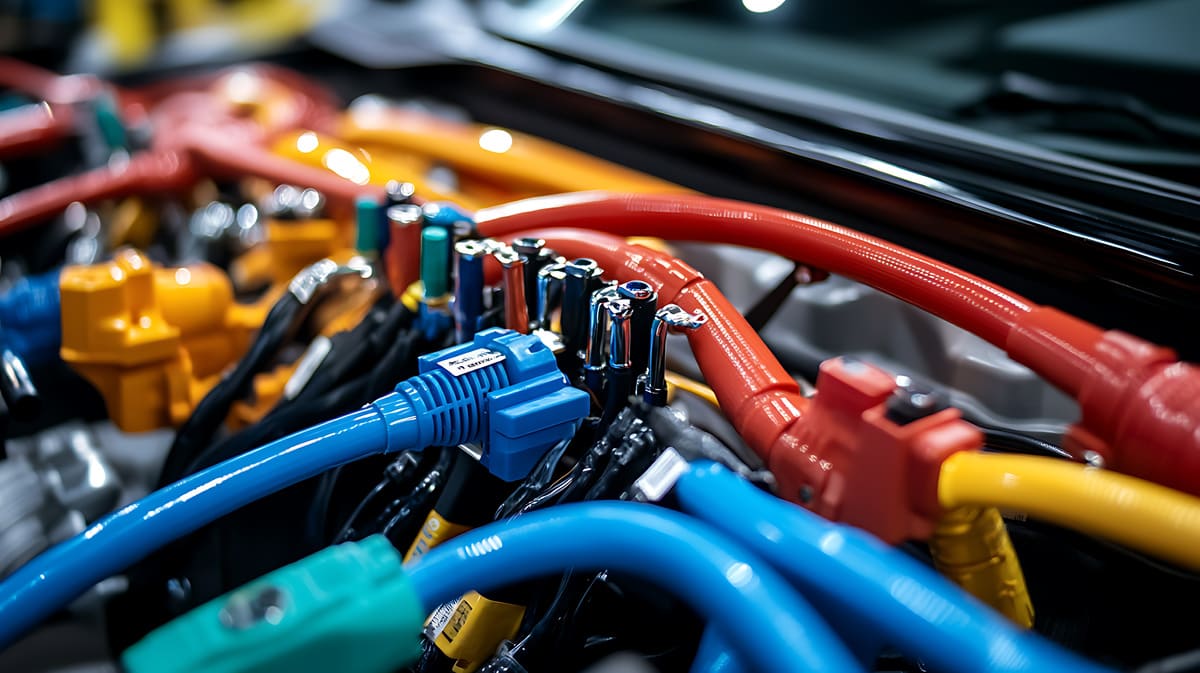
Close-up of colorful electrical cables and connectors inside an automotive or industrial electrical system.

Practical & Commercial Considerations

Standard injection molding equipment handles polyesters with moderate to high injection pressures (70-140 MPa) depending on glass loading. General-purpose screws with compression ratio of 2.5:1 to 3.0:1 work well. Hot runner systems reduce waste and improve cycle time. Desiccant or dehumidifying hopper dryers required to achieve <0.02% moisture content before processing. Glass-reinforced grades wear screws and require hardened barrels, screws, and non-return valves for production runs.

PBT crystallizes rapidly, enabling cycle times of 20-45 seconds for thin-wall parts (1-3 mm). PET requires longer cooling due to slower crystallization (45-90 seconds typical). Glass-reinforced grades crystallize faster than unreinforced. Mold temperatures 60-120°C balance crystallization with cycle time. Higher mold temperatures improve surface finish but extend cooling. Cold runner systems acceptable, hot runners reduce scrap.

Polyesters are hygroscopic and require thorough drying before processing. PBT dries at 120°C for 4 hours to reach <0.02% moisture. PET requires 160°C for 4-6 hours due to higher melt temperature. Regrind requires similar drying treatment. Inadequate drying causes hydrolytic degradation, producing brittleness, splay marks, bubbles, and silver streaks. Moisture meters verify dryness.

Processing temperatures: PET 260-290°C, PBT 240-270°C depending on grade and glass loading. Higher temperatures required for glass-reinforced grades to achieve proper flow. Residence time should not exceed 15-20 minutes to prevent thermal degradation. Purge with same material, HDPE, or polystyrene. Mold temperatures 60-120°C depending on crystallization requirements and surface finish needs.

Shrinkage rates: unreinforced 1.5-2.5%, glass-reinforced 0.3-1.0%. Glass reinforcement creates anisotropic shrinkage with less shrinkage in flow direction. Requires mold compensation. Post-mold shrinkage stabilizes within 24-48 hours at room temperature. Annealing at 100-130°C improves dimensional stability for precision parts.

Dimensional stability is excellent with low moisture absorption. Tolerances to ±0.1-0.2% achievable with proper mold design and process control. Glass-reinforced grades more stable than unreinforced. Warpage controlled through balanced gating, uniform wall thickness, and optimized cooling. Post-molding dimensional changes minimal compared to hygroscopic nylon.

Regrind ratios of 15-25% mixed with virgin material typical. Glass-reinforced grades tolerate higher regrind percentages than unreinforced. Regrind must be dried thoroughly and free from contamination. Multiple reprocessing cycles cause molecular weight reduction and property loss. PET recycling infrastructure well-established for post-consumer applications.

Featured

Suppliers and Products

Celanese logo

Crastin®

View Products
Celanese logo

Celanex®

View Products
Celanese logo

Rynite®

View Products

Frequently Asked Questions

What are polyester resins and what are they used for?

Polyester resins include polyethylene terephthalate (PET) and polybutylene terephthalate (PBT), semi-crystalline thermoplastics offering excellent mechanical strength, electrical insulation, and chemical resistance. PET dominates packaging with its optical clarity (85-90% light transmission) and FDA food contact approval (21 CFR 177.1630), appearing in beverage bottles, food containers, textile fibers for clothing and carpets, and thermoformed clamshells. PBT serves automotive electrical connectors, sensor housings, circuit breakers, and precision gears where rapid crystallization (20-45 second cycle times), dimensional stability (0.08-0.15% moisture absorption), and continuous use temperatures to 140°C justify premium cost over PET. Both materials process through injection molding, extrusion, and blow molding at 240-290°C, with glass reinforcement (10-50%) enabling metal replacement in structural applications.

What is the difference between PET and PBT?

PET and PBT differ primarily in crystallization speed, moisture absorption, and heat resistance. PET crystallizes slowly (45-90 second cycles), processes at 260-290°C, absorbs 0.1-0.3% moisture, and offers continuous use to 115°C with excellent optical clarity (85-90% light transmission) and FDA food contact approval for packaging applications. PBT crystallizes rapidly (20-45 second cycles for productivity), processes at 240-270°C, absorbs only 0.08-0.15% moisture (maintaining tighter tolerances than nylon), and provides continuous use to 140°C, making it preferred for automotive electrical connectors, circuit breakers, and precision components requiring dimensional stability. Glass-reinforced grades of both reach 8,000-14,000 MPa modulus for structural applications, but PBT's 10-20% cost premium over PET is justified when rapid processing, lower moisture sensitivity, or higher heat resistance prove critical.

How does PBT compare to nylon in moisture absorption and dimensional stability?

PBT absorbs far less moisture than nylon (0.08-0.15% vs 1.5-2.5% at 24 hours), delivering superior dimensional stability in humid environments where nylon swells significantly. This fundamental difference makes PBT preferred for electrical connectors requiring tight tolerances (±0.1-0.2%) independent of humidity, precision gearboxes where dimensional changes cause noise or wear, and automotive under-hood applications where moisture fluctuates. PBT maintains consistent performance across 20-85% relative humidity while nylon dimensions change 0.3-0.5%, affecting assembly fits and electrical contact reliability. PBT also offers better hydrocarbon resistance than nylon for fuel system components. However, nylon provides higher impact strength, better wear resistance for unlubricated bearings, and lower cost, making material selection depend on whether dimensional stability or mechanical toughness proves more critical.

What are the processing methods for polyester (PET/PBT)?

Injection molding processes polyesters at 240-290°C barrel temperature (PET higher, PBT lower) with 70-140 MPa injection pressure, requiring 4-6 hour drying at 120-160°C to reach <0.02% moisture for optical quality. PBT crystallizes rapidly enabling 20-45 second cycles for thin-wall parts while PET requires 45-90 seconds. Blow molding creates PET bottles using stretch blow molding at 260-280°C with precise preform heating and blowing pressure control for wall thickness uniformity. Extrusion produces PET textile fibers, sheet for thermoforming, and film at 260-280°C with cooling control maintaining optical properties. Thermoforming heats extruded PET sheet to 120-160°C for packaging clamshells and trays. All processes demand hardened screws for glass-reinforced grades, hot runner systems reducing scrap, and mold temperatures 60-120°C balancing crystallization with cycle time.

Is polyester recyclable?

PET carries recycling code #1 with established mechanical and chemical recycling infrastructure converting post-consumer bottles into fiber, sheet, and molding compounds. Mechanical recycling sorts, cleans, and reprocesses PET bottles at 15-25% regrind ratios maintaining acceptable properties for packaging, textiles, and strapping applications. Chemical recycling depolymerizes PET into monomers (terephthalic acid and ethylene glycol) for repolymerization into virgin-quality resin, eliminating contamination concerns from mechanical recycling. Post-consumer recycled PET (rPET) reduces carbon footprint 60-70% versus virgin resin while meeting FDA food contact requirements for new bottles containing rPET content. PBT recycling is less established due to automotive and electronics applications making collection difficult, though post-industrial scrap recycles effectively at 15-25% ratios with proper drying. Both materials comply with RoHS and REACH regulations.

Connect with Our Experts Today

If you need some extra guidance in finding the right product, fill out the form and our team will be in touch shortly.

Contact Us

Browse and Order Products on Formerra+

Explore Our Products on Formerra+ Discover the full range of high-quality products on the upgraded Formerra+ online experience.

Visit Formerra+

Sources

Polyethylene Terephthalate (PET) Plastic: Properties, Uses & Application. SpecialChem. 2025. https://www.specialchem.com/plastics/guide/polyethylene-terephthalate-pet-plastic

Polybutylene Terephthalate (PBT) Technical Guide. SpecialChem. 2025. https://www.specialchem.com/plastics/guide/polybutylene-terephthalate-pbt

Crastin and Celanex PBT Product Guide. Celanese Corporation. 2025. https://www.celanese.com/products/crastin-celanex-pbt

Rynite PET Technical Data. Celanese Corporation. 2024. https://www.celanese.com/products/rynite-pet

Thermoplastic Polyester Design Guide. Society of Plastics Engineers. 2024.

Formerra
Contact Us View Suppliers
  • About
    • Careers
    • Leadership
    • Newsroom
  • Resources
    • Blog
    • Datasheets
  • Formerra+
    • Login
    • Register
    • Shop Products
Linkedin

Sitemap |  Privacy Policy |  Terms and Conditions of Sale |  Website Legal Disclaimer