1-888-502-0951
  • Formerra+ Login |
Contact Us
  • Products
    • Products
    • Polymers
    • High-Performance Polymers
    • Sustainable Solutions
    • Elastomers, Adhesives, Sealants
    • Chemistries
    • Products Tap into our expert guidance and product range to uncover solutions that align with your specific application demands. Explore Solutions
  • Suppliers
    • Suppliers
    • AmSty
    • Avient
    • BASF
    • Celanese
    • Chevron Phillips
    • Covestro
    • Delrin
    • Dow
    • DuPont
    • Eastman
    • Evonik
    • GEON
    • H.B Fuller
    • INEOS
    • INEOS Styrolution
    • INVISTA
    • LyondellBasell
    • Nylene
    • Pinnacle Polymers
    • PMC Polymer Products
    • PureCycle
    • RheTech
    • Syensqo
    • Techmer PM
    • Trinseo
    • Westlake Chemical
    • Suppliers We partner with world-class suppliers to provide performance materials and expert support so you can choose with confidence. Find Suppliers
  • Industries
    • Industries
    • Healthcare
    • Outdoor & Powersports
    • Consumer​
    • Mobility
    • Packaging
    • Industrial
    • Electrical & Electronics
    • Building & Construction
    • Industries Supporting diverse industries with advanced materials and expert insight tailored to your specific application needs. View Industries
  • Capabilities
    • Capabilities
    • Technical Support
      • Technical Support
      • Material Selection
      • Process Development & Optimization
      • Training
      • Troubleshooting
    • Quality Compliance
      • Quality Compliance
      • REACH Compliance
    • Supply Chain Optimization
    • Capabilities Optimize production with Formerra’s expert support in technical guidance, supply chain solutions, and compliance. Learn More
  • Resources
    • Resources
    • Blog
    • Datasheets
    • Documentation
      • Documentation
      • ISO Certificate
      • ISCC Certificate
      • Terms and Conditions of Sale
      • W9 and Supporting Document
    • Line Cards
      • Line Cards
      • Supplier
      • High Performance Polymers
      • Sustainability
      • Automotive
      • Healthcare
      • Outdoor High Performance
    • Product Literature
    • Resources Your one-stop hub for blogs, line cards, certifications, brochures, and essential safety and technical documentation. Access Resources
  • About
    • About
    • Global Network
      • Global Network
      • Asia
      • Central America
      • Europe
      • North America
    • Value Chain
    • Careers
    • Leadership
    • Newsroom
    • About Formerra is a next-gen materials distributor empowering innovation through expertise, collaboration, and technical support. Our Story
  • Formerra+
    • Formerra+
    • Login
    • Register
    • Track Orders
    • Shop Products
    • Formerra+ Get 24/7 access to real-time pricing, product data, and fast ordering with a Formerra+ account. Shop Products
    • formerra
Contact Us

Thermoplastic Copolyester Elastomers (TPC-ET) and Blends

Thermoplastic Copolyester Elastomers (TPC-ET) and Blends

Material Category

Engineering Thermoplastics

Typical Fillers / Reinforcements

Glass fiber (10-30% for structural grades), mineral fillers, flame retardants (phosphorus-based, halogen-free options), UV stabilizers, hydrolysis stabilizers, colorants, lubricants

Compatible Processes

Injection molding, Extrusion (profile, tubing, sheet, film, blown film), Blow molding, Overmolding, Insert molding, Thermoforming (limited)

Regulatory Approvals

FDA 21 CFR compliance (specific grades for food contact and medical packaging), ISO 10993 (biocompatibility, selected grades), UL94 V-0 to HB (flammability, grade dependent), RoHS and REACH compliant grades available

Find this polymer at Formerra+
Overview TPC-ET Types and Grades Performance Characteristics Strengths, Weaknesses, and Operating Limits Applications Key Industries Design, Assembly & Aesthetics Practical and Commercial Considerations Featured Products and Suppliers Frequently Asked Questions

Thermoplastic Copolyester Elastomers (TPC-ET) Overview

Thermoplastic copolyester elastomers (TPC-ET), also known as COPE or TPEE, are high-performance block copolymers that combine the toughness and elasticity of rubber with the strength, chemical resistance, and easy processing of engineering thermoplastics. Known for outstanding flex fatigue resistance, broad service temperature range, and superior recovery from deformation, TPC-ET has become the preferred elastomer for applications where rubber compounds lack the heat resistance, processability, or dimensional precision required. The material covers hardness from Shore D30 to D80 without the need for plasticizers.

As a TPC-ET material supplier, Formerra provides access to thermoplastic copolyester elastomer grades from Celanese, including Hytrel TPC-ET and Bexloy TPC product lines covering automotive, wire and cable, industrial, consumer electronics, and medical applications.

TPC-ET con of alternating hard and soft segments within each polymer chain. The hard segment is typically crystalline polybutylene terephthalate (PBT), which provides stiffness, heat resistance, and chemical resistance. The soft segment is an amorphous long-chain polyether, typically polytetramethylene ether glycol (PTMEG), which delivers elasticity, flexibility, and low-temperature performance. The ratio and molecular weight of these segments determine where each grade falls on the hardness spectrum, from very soft rubber-like grades to semi-rigid engineering compositions.

TPC-ET materials are available in grades covering Shore D hardness from 30 to 80, spanning applications from flexible hose and cable jacketing to semi-rigid structural components requiring both strength and elasticity. Specialty grades include glass fiber-reinforced formulations for enhanced stiffness and creep resistance, flame-retardant grades for wire and cable applications, UV-stabilized outdoor grades, and low-extractable formulations for food contact and medical use.

Flex fatigue resistance is the defining performance characteristic of TPC-ET. The block copolymer structure allows the material to withstand millions of flex cycles without crack initiation or propagation, far exceeding the fatigue life of most rubber compounds, TPU, and other thermoplastic elastomers. This durability makes TPC-ET the standard material for automotive bellows, constant velocity boots, air intake ducts, and cable jacketing on power cords that flex repeatedly throughout their service life.

Temperature performance across a wide range distinguishes TPC-ET from softer elastomers. The material maintains mechanical properties and elasticity from -40 degrees C to 150 degrees C in continuous service, with short-term capability to 180 degrees C. This range, combined with excellent compression set recovery (15-40% at 23 degrees C), allows TPC-ET to replace rubber in automotive and industrial applications where dimensional stability after compression is required at elevated service temperatures.

Processing versatility distinguishes TPC-ET from thermoset rubbers. The material processes on standard injection molding, extrusion, and blow molding equipment at 200-240 degrees C, producing parts faster than compression-molded rubber with full thermoplastic recyclability. Multi-shot overmolding bonds TPC-ET directly to engineering thermoplastic substrates including nylon, PBT, and PET, eliminating adhesives and secondary assembly steps in complex multi-material parts.

pyramid

TPC-ET Types and Grades

TPC-ET pellets in standard grades produce no volatile plasticizers or softeners during service life, unlike plasticized PVC and some other flexible compounds. The inherent flexibility derives from the polyether soft segment within the polymer backbone, eliminating plasticizer migration, surface blooming, and compliance issues in food contact and medical applications.

Standard TPC-ET (Shore D30-55)

Soft to medium-hardness grades with maximum flexibility and elasticity. Excellent flex fatigue resistance and low-temperature performance. Hose, tubing, cable jacketing, automotive bellows and boots, and soft overmolded grips and seals.

Medium-Hard TPC-ET (Shore D55-70)

Balanced grades offering stiffness with retained elasticity and impact resistance. Strong mechanical performance for dynamic applications under load. Automotive air ducts, industrial flexible connectors, power tool housings, and sporting goods components.

Rigid TPC-ET (Shore D70-80)

Near-engineering-plastic stiffness with residual elasticity for impact absorption. Dimensional stability under load with flex at assembly connections. Structural automotive and industrial components requiring toughness at elevated temperature.

Glass Fiber-Reinforced Grades

TPC-ET with 10-30% glass fiber for increased modulus, reduced creep, and enhanced dimensional stability. Higher stiffness and improved heat distortion temperature. Load-bearing structural components, gear housings, and precision flexible connectors.

Flame-Retardant Grades

FR-modified TPC-ET meeting UL94 V-0 or V-2 ratings for low-halogen or halogen-free wire and cable applications, electronics housings, and industrial components requiring fire performance certification.

Performance Characteristics

Mechanical Properties

Mechanical Properties

Tensile strength

15-55 MPa (Shore D30-80 range)

Elongation at break

200-900% (softer grades show higher values)

Flexural modulus

40-800 MPa (grade dependent)

Compression set

15-40% at 23 degrees C (excellent recovery)

Tear strength

50-200 kN/m

Hardness range

Shore D30 to Shore D80

Thermal Properties

Thermal Properties

Service temperature range

-40 to 150 degrees C (continuous use); up to 180 degrees C short-term

Melting point

155-220 degrees C (grade dependent

Heat deflection temperature

50-170 degrees C at 0.46 MPa (grade dependent)

Glass transition temperature (soft segment)

-70 to -50 degrees C

Processing temperature range

200-240 degrees C

Coefficient of linear thermal expansion

130-180 x 10^-6 /degrees 

Operating Environment

Operating Environment

Water absorption

0.5-1.0% in 24 h at 23 degrees C. TPC-ET absorbs moderate moisture from the polyester hard segments and polyether soft segments. This is lower than nylon but higher than polyolefins or PS. Pre-drying before processing is required to prevent hydrolytic chain scission, surface defects, and reduced mechanical properties in finished parts. Parts maintain adequate dimensional stability in most service environments.

UV/weatherability rating

Fair without stabilizers; good with UV packages. The polyester backbone undergoes UV-induced chain scission and surface degradation upon prolonged outdoor exposure. UV-stabilized grades with hindered amine light stabilizers and UV absorbers maintain mechanical properties and appearance for extended outdoor service. Carbon black loaded grades provide strong UV protection for industrial and automotive applications without color constraints.

Hydrolysis resistance

Good for standard grades; excellent for hydrolysis-stabilized grades. The polyester hard segments are susceptible to hydrolytic degradation in hot water and steam above 60-70 degrees C. Extended immersion at elevated temperatures reduces molecular weight and mechanical properties. Hydrolysis-stabilized grades using carbodiimide additives extend service life significantly in hot, humid, and water-contact environments. Select hydrolysis-stabilized grades for any application involving long-term water or fluid contact at elevated temperatures.

Stress cracking sensitivity

Low for mechanical stress cracking. The elastomeric nature of TPC-ET absorbs stress through deformation rather than brittle fracture, making it inherently resistant to environmental stress cracking from mechanical loading. Chemical stress cracking in concentrated solvents requires evaluation; ketones and aromatic hydrocarbons at elevated temperatures cause swelling and property loss. Overall, TPC-ET shows better ESC resistance than rigid engineering thermoplastics.

Electrical Properties

Electrical Properties

Dielectric strength

20-30 kV/mm

Dielectric constant

3.0-4.5 at 1 MHz (grade dependent)

Dissipation factor

0.01-0.05 at 1 MHz

Volume resistivity

10^12-10^14 ohm-cm

Surface resistivity

10^12-10^14 ohm

Physical Properties

Physical Properties

Density

1.10-1.40 g/cm3 (grade dependent; glass-filled grades higher)

Mold shrinkage

1.0-2.5% (anisotropic between flow and cross-flow directions)

Rebound resilience

60-80% (excellent elastic recovery)

Flammability rating

UL94 HB (standard); V-0 and V-2 available with FR additives

Chemical Resistance

Chemical Resistance

Excellent resistance

Aliphatic hydrocarbons, mineral oils, greases, hydraulic fluids, dilute inorganic acids, many common industrial fluids

Good resistance

Dilute bases, alcohols, gasoline and diesel fuel (short-term), glycols, aqueous solutions at ambient temperature

Limited resistance

Aromatic hydrocarbons at elevated temperatures, concentrated acids, esters

Poor resistance

Concentrated hot bases, chlorinated solvents, ketones at elevated temperatures, strong oxidizing agents

Note

TPC-ET offers significantly better fuel and oil resistance than TPU, and better high-temperature chemical resistance than most SEBS and SBS block copolymers. Verify compatibility for specific chemical exposures beyond ambient temperature conditions.

Strengths, Weaknesses, and Operating Limits

Key Strengths

  • Exceptional Flex Fatigue Resistance: TPC-ET withstands millions of flex cycles without crack initiation or propagation, a performance level that rubber compounds, TPU, and other thermoplastic elastomers rarely match. The block copolymer structure distributes stress uniformly through the hard and soft segment network, preventing the localized stress concentrations that cause fatigue failure. This durability drives adoption in automotive bellows, constant velocity boots, cable jacketing, and industrial hose that flex continuously throughout decades of service life.
  • Wide Service Temperature Range: Continuous service from -40 to 150 degrees C in a single material eliminates the need for different polymers at temperature extremes. Soft segment glass transition below -50 degrees C maintains flexibility in severe cold without brittleness. The high-melting crystalline PBT hard segment retains stiffness and load-bearing capability to 150 degrees C and above, far exceeding the 80-100 degrees C limit of most TPU grades. This range covers automotive underhood, industrial outdoor, and extreme cold applications in one material system.
  • Superior Compression Set Recovery: Compression set values of 15-40% at 23 degrees C and 50-70% at 100 degrees C place TPC-ET among the best thermoplastic elastomers for maintaining sealing force after prolonged compression. Rubber-like recovery after deformation persists across the entire service temperature range. Seals, gaskets, and dynamic contact components maintain consistent contact pressure and dimensional integrity throughout service life without the permanent set accumulation common in softer thermoplastic elastomers.
  • Thermoplastic Processing Without Vulcanization: TPC-ET processes on standard injection molding and extrusion equipment at 200-240 degrees C without the vulcanization step required for thermoset rubber. Cycle times are faster, scrapped material is recyclable, and dimensional precision far exceeds compression-molded rubber parts. Overmolding creates integral rubber-like surfaces bonded directly to engineering thermoplastic substrates, eliminating adhesives, secondary assembly, and the delamination risk of adhesively bonded assemblies.
  • No Plasticizer Migration: Unlike plasticized PVC and some flexible compounds, TPC-ET achieves its flexibility from the inherent polyether soft segment within the backbone chemistry, not from added plasticizers. This eliminates plasticizer migration to surfaces, extraction into food or medical fluids, and long-term embrittlement from plasticizer loss. Parts maintain consistent mechanical properties and surface characteristics throughout their service life, supporting compliance requirements in food contact and medical applications.
  • Superior Fuel and Oil Resistance: TPC-ET resists mineral oils, hydraulic fluids, aliphatic fuels, and greases significantly better than TPU and most elastomers at elevated temperatures. This resistance enables use in fuel system components, hydraulic hose, and underhood automotive applications where sustained fluid contact at operating temperatures degrades competing elastomers. The PBT hard segment provides a barrier to oil absorption, maintaining dimensional stability and mechanical properties in fluid service.
  • Recyclability and Reprocessability: As a thermoplastic, TPC-ET is fully reprocessable and recyclable at end of life, unlike vulcanized rubber. Material recovery from production scrap, runners, and rejected parts reduces material cost and environmental impact. Regrind at 10-20% ratios maintains adequate properties for non-critical applications. This recyclability aligns with manufacturer sustainability commitments and supports compliance with product take-back and recycled content regulations in automotive and electronics markets.

Known Weaknesses

  • Higher Cost Versus Commodity Elastomers: TPC-ET costs significantly more per kilogram than vulcanized rubber, SEBS, SBS, and even most TPU grades. The material cost premium is justified by performance in demanding applications but limits adoption in cost-sensitive, high-volume consumer products where adequate performance is achievable with lower-cost elastomers. Total cost of ownership calculations including processing efficiency, scrap recyclability, and reduced assembly steps often close this gap for complex automotive and industrial parts.
  • Mandatory Pre-Drying Required: TPC-ET absorbs 0.5-1.0% moisture and must be dried at 100-110 degrees C for 2-4 hours in a desiccant dryer before processing. Undried material undergoes hydrolytic chain scission at melt temperatures, producing lower molecular weight polymer with reduced mechanical properties, surface blemishes, and splay marks in finished parts. This requirement adds production time, demands drying equipment investment, and requires moisture monitoring. Material handling in humid environments needs controlled storage in sealed containers.
  • Hydrolysis Sensitivity in Hot Fluid Environments: The polyester hard segments in TPC-ET are susceptible to hydrolytic chain scission during extended contact with hot water and steam above 60-70 degrees C. Long-term immersion at elevated temperatures reduces molecular weight and causes mechanical property loss. Standard grades are not suitable for continuous hot water or steam service. Hydrolysis-stabilized grades with carbodiimide additives extend service life but add cost and require supplier confirmation for the specific application conditions.
  • Limited Optical Clarity: Standard TPC-ET grades are translucent to opaque due to the crystalline PBT hard segment phase. The material is not suitable for applications requiring optical clarity or transparency. Clear or transparent grades are not widely available in the TPC-ET product family. Applications requiring flexible transparent materials must consider alternative polymers such as clear TPU or flexible acrylic grades.
  • UV Sensitivity Without Stabilizer Packages: The polyester backbone undergoes UV-induced chain scission and surface yellowing in outdoor applications without UV stabilizers. Standard unfilled grades fail quickly under direct sunlight. Specifying UV-stabilized grades adds cost and limits color options. Even with stabilizers, TPC-ET does not match the inherent UV resistance of ASA or UV-stabilized PP for extended outdoor applications. Validate UV-stabilized grades under accelerated weathering conditions before outdoor specification.
  • Solvent Sensitivity at Elevated Temperatures: While TPC-ET resists many chemicals at ambient temperature, ketones, aromatic solvents, and chlorinated solvents cause significant swelling and property loss at elevated temperatures. Industrial cleaning processes, adhesive applications, and chemical exposure above ambient temperature require careful solvent selection and compatibility verification. Cold solvent contact is more tolerable but should still be evaluated before approval.

Operating Limits

  • Temperature Range: Continuous service from -40 to 150 degrees C; short-term peaks to 180 degrees C. The PBT hard segment melting point (155-220 degrees C depending on grade) represents the absolute upper limit for load-bearing use. Processing at 200-240 degrees C is safe but must not exceed 250 degrees C to prevent thermal degradation and molecular weight reduction. Low-temperature performance to -40 degrees C requires grades with sufficient polyether soft segment content; confirm grade suitability for specific cold exposure requirements.
  • Chemical Environment: Avoid concentrated hot bases, chlorinated solvents, and ketones at elevated temperatures throughout the product lifecycle. Verify compatibility with all fluids the part contacts in service, especially at operating temperatures above ambient. Hot water and steam above 60-70 degrees C require hydrolysis-stabilized grades with confirmed service life data. Fuel and oil contact is generally acceptable for standard grades at typical operating temperatures. Document chemical exposures and operating temperatures in detail before grade selection.
  • Mechanical Stress and Loading: TPC-ET accommodates dynamic cyclic loading and flex fatigue far better than rigid polymers. Design sustained static loads below 30-40% of tensile strength to limit creep deformation under prolonged loading. Compression set values (15-40% at 23 degrees C, higher at elevated temperatures) must be accounted for in seal and gasket designs requiring maintained preload. Dynamic applications benefit from the outstanding fatigue resistance of TPC-ET. Weld lines in injection molded parts show reduced tensile and fatigue properties; position them away from high-stress zones.

Typical Applications

  • Automotive bellows, constant velocity boots, and protective covers requiring high flex fatigue and wide temperature range
  • Automotive air intake ducts and charge air cooler ducting requiring heat and oil resistance
  • Wire and cable jacketing for power cords, automotive wiring, and industrial cables requiring flex life and temperature resistance
  • Hydraulic and pneumatic hose and flexible tubing for industrial fluid handling applications
  • Power tool housings and grips overmolded onto rigid thermoplastic substrates
  • Ski boot flex components and athletic footwear requiring stiffness with high flex fatigue performance
  • Industrial drive belts, conveyor belts, and mechanical power transmission components
  • Medical tubing and flexible device components using low-extractable TPC-ET grades

Niche Applications

  • Inflatable recreational equipment including kayaks and inflatable boat hulls using welded TPC-ET sheet
  • Peristaltic pump tubing requiring high flex fatigue life and broad chemical resistance
  • Fuel system components including fuel line hose and tank connections requiring fuel resistance
  • Underwater connectors and marine equipment components requiring water and saltwater resistance
  • Smart wearable device bands and housings requiring flex fatigue, skin compatibility, and durability
  • High-performance air springs and suspension components replacing rubber in weight-critical applications

Key Industries

Mobility

Industrial

Electrical & Electronics

Outdoor & Powersports

Healthcare

Consumer

Design, Assembly & Aesthetics

  • Surface finish capability: TPC-ET reproduces mold surface texture from high gloss to matte and textured surfaces with a characteristic rubber-like tactile quality. The material fills fine mold detail well due to moderate melt viscosity at processing temperatures. Soft grades require gentle ejection system design to prevent distortion during demolding. Glass fiber-reinforced grades show surface fiber exposure at high fiber content without process optimization. Overall surface quality is excellent for both consumer and technical applications.
  • Sink, warpage, and visible defect tendency: Moderate shrinkage (1.0-2.5%) with anisotropy between flow and cross-flow directions increases warpage risk in flat parts. Uniform wall thickness, symmetric gating, and balanced runner systems minimize differential shrinkage and warpage. Softer grades show more shrinkage than harder grades. Weld lines show reduced mechanical properties and require positioning away from dynamic stress zones. Post-mold conditioning for 24 hours before dimensioning is recommended for critical tolerance applications.
  • Colorability: TPC-ET accepts masterbatch colorants in a wide range of colors with good depth and consistency. Standard grades are natural translucent to opaque white in unfilled grades and tan to off-white in glass-reinforced versions. Black grades with carbon black provide UV protection and a premium technical appearance for automotive and industrial applications. Custom colors using organic pigments achieve good color intensity. Titanium dioxide-based masterbatch provides bright white and light color bases.
  • Color stability: Unstabilized TPC-ET yellows under UV exposure due to polyester backbone photodegradation. Indoor color stability is good across the service life of most consumer and industrial products. UV-stabilized grades maintain color for extended outdoor exposure in temperate climates. High-temperature processing above 240 degrees C causes thermal yellowing. Hydrolysis in humid environments at elevated temperatures causes surface dulling and color change over time. Specify stabilized grades and validate under relevant accelerated conditions.
  • Transparency and clarity: Standard TPC-ET grades are translucent to opaque due to the crystalline PBT hard segment. The material is not suitable for optical clarity applications. Even thin sections in soft grades show only partial light transmission rather than true optical clarity. Applications requiring flexible transparency must use alternative materials such as clear TPU, flexible acrylic, or silicone. TPC-ET competes on performance, not optical properties.
  • Abrasion and chemical mar resistance: TPC-ET delivers very good abrasion resistance, approaching TPU for harder grades and significantly outperforming most rubber compounds. The hard PBT segment contributes surface wear resistance beyond what purely soft elastomers achieve. Chemical mar from solvent exposure causes surface swelling and dulling at elevated temperatures. Mineral oils, greases, and water cause minimal surface degradation. The combination of abrasion resistance and flex fatigue performance makes TPC-ET particularly durable in cable and hose jacket applications.
  • Marking methods: Laser marking produces clear, permanent identification on standard and carbon black grades. Pad printing and screen printing adhere well to TPC-ET surfaces with appropriate ink systems. Hot stamping delivers decorative metallic finishes on harder grades. In-mold labeling is compatible with injection molded parts. Embossing and debossing during molding create tactile identification and texture effects. Test marking methods on production-representative samples, as surface chemistry varies by grade and colorant system.
  • Coating, painting, and plating suitability: TPC-ET accepts flexible coatings that accommodate substrate elongation after surface preparation including corona or plasma treatment. Rigid coatings crack under flex cycling and are not suitable for flexible TPC-ET grades. Flexible polyurethane-based topcoats improve surface scratch and chemical resistance. Vacuum metallization produces decorative metallic finishes on harder, less flexible grades. Standard chrome electroplating is impractical due to the elastomeric character of the substrate. Primer-free adhesion is achievable with surface activation on softer grades.
  • Joining methods: Heat welding including hot plate, infrared, and laser welding produces strong joints between compatible TPC-ET grades. Ultrasonic welding suits harder grades and simpler geometries. Adhesive bonding using flexible polyurethane, cyanoacrylate, or two-component epoxy adhesives creates structural joints. Overmolding bonds TPC-ET directly to PBT, nylon, and other engineering thermoplastic substrates during injection molding, eliminating secondary assembly. Insert molding integrates metal hardware into TPC-ET parts. Mechanical fastening works in harder grades with properly designed boss and thread geometries.
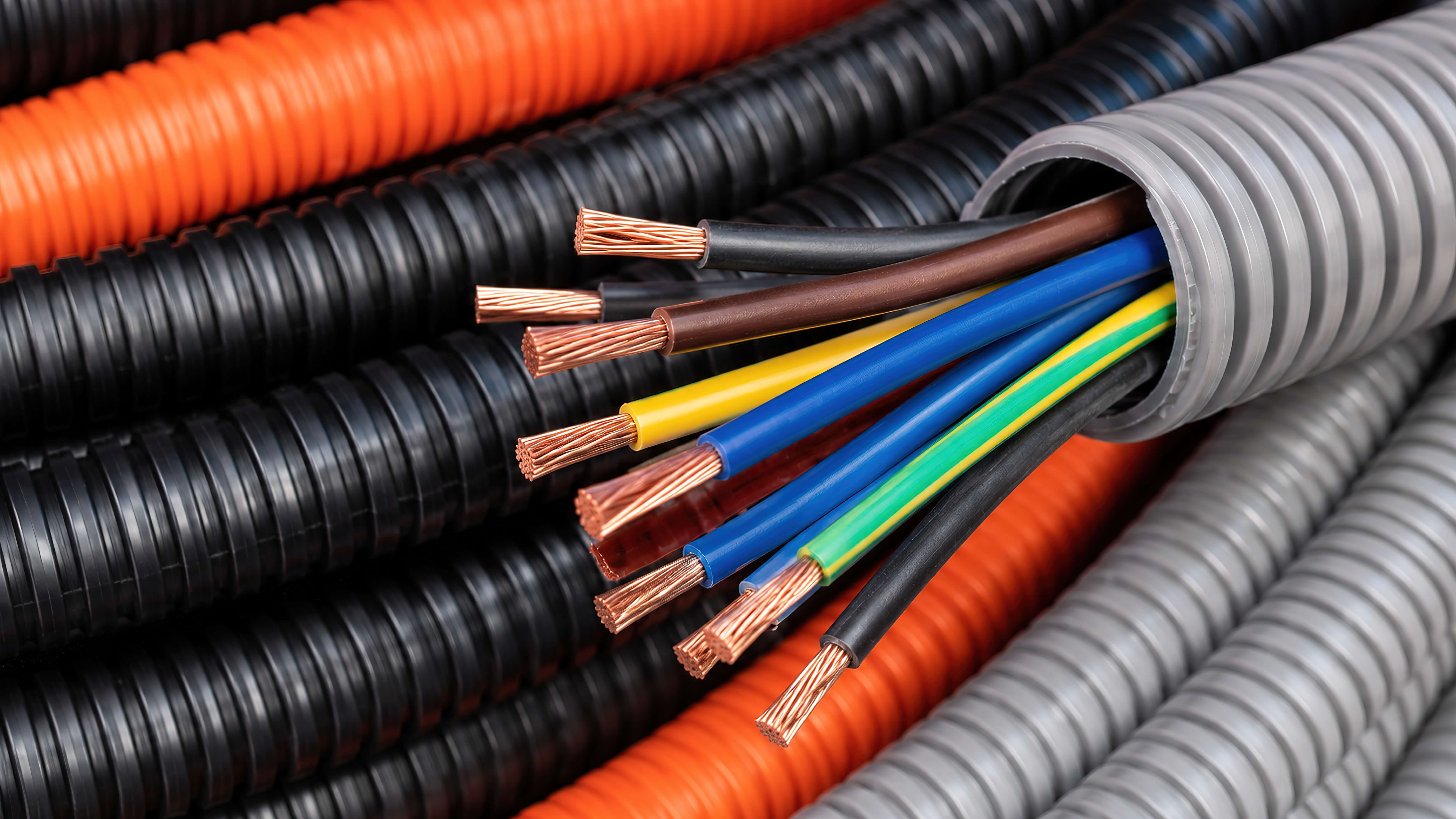
colored electrical wires inside flexible conduit tubing

Practical and Commercial Considerations

Processing equipment fit

Standard injection molding and extrusion equipment handles TPC-ET without specialized modifications. A compression ratio of 2.5:1 to 3.0:1 and L/D ratio of 20:1 to 24:1 suits most grades. Moderate screw shear design prevents localized overheating that degrades the polyester hard segment. Standard steel metallurgy is acceptable for unfilled grades; hardened or corrosion-resistant metallurgy extends tool and screw life for glass fiber-reinforced grades. Hot runner systems work well with precise temperature control to prevent melt residence time degradation. Extrusion of tubing and profiles requires careful temperature zone control and a sizing and cooling system matched to dimensional requirements.

Cycle time and productivity notes

TPC-ET cycle times are comparable to engineering thermoplastics at equivalent wall thickness. Cooling times are moderate because thermal conductivity falls between rigid plastics and soft elastomers. Mold temperatures of 30-60 degrees C balance cycle time and part surface quality. Softer grades require slightly longer cooling to achieve sufficient green strength for distortion-free ejection. Multi-cavity tooling achieves high productivity for small parts such as grommets and cable boots. Extrusion of tubing and jacketing achieves continuous high-throughput production with online dimensional gauging.

Drying requirements

TPC-ET requires thorough pre-drying before processing. Dry at 100-110 degrees C for 2-4 hours in a desiccant dryer to achieve a moisture content of 0.05% or below. Insufficient drying causes hydrolytic chain scission at melt temperatures, producing lower molecular weight polymer with reduced tensile strength, elongation, and tear strength in finished parts. Surface splay marks and voids indicate inadequate drying. Hopper dryers maintain dryness during production runs. Verify dryness with a moisture balance before processing. Store material in sealed containers to prevent reabsorption after drying.

Melt and mold temperature guidance

Process TPC-ET at melt temperatures of 200-240 degrees C depending on grade hardness and application. Softer grades (Shore D30-50) process at 200-220 degrees C. Harder grades (Shore D60-80) process at 220-240 degrees C. Do not exceed 250 degrees C to prevent thermal degradation, molecular weight reduction, and discoloration. Mold temperatures of 30-60 degrees C balance surface quality and cycle time. Lower mold temperatures (30-40 degrees C) suit short-cycle, thin-wall parts. Higher temperatures (50-60 degrees C) improve surface gloss, weld line strength, and dimensional stability in thicker or complex parts.

Shrinkage

Mold shrinkage ranges from 1.0-2.5% depending on grade hardness, glass fiber content, and processing conditions. Softer grades show higher shrinkage than rigid grades. Shrinkage is anisotropic between flow and cross-flow directions due to molecular and fiber orientation, which complicates tool design for dimensional accuracy in flat parts. Glass fiber-reinforced grades show lower and more anisotropic shrinkage (typically 0.5-1.5% in the flow direction, 1.5-2.5% transverse). Post-mold shrinkage continues for 24-48 hours as the crystalline hard segment fully develops.

Dimensional stability and tolerance capability

Moisture absorption (0.5-1.0%) affects dimensional stability in humid service environments, particularly for precision components. Post-mold crystallization of the PBT hard segment causes continued shrinkage for 24-48 hours, which must be accounted for in tolerance specifications. TPC-ET achieves tolerances of plus or minus 0.2-0.5 mm for typical automotive and industrial applications. Glass fiber-reinforced grades deliver tighter tolerances for structural components. Thermal expansion coefficient of 130-180 x 10^-6 /degrees C requires compensation in assemblies combining TPC-ET with metal or rigid plastic components.

Regrind and scrap utilization

TPC-ET accepts regrind at 10-20% ratios for standard non-critical applications without significant property loss when properly dried before use. Clean, single-source regrind from promptly granulated runners and rejected parts maintains properties. Multiple reprocessing cycles reduce molecular weight and mechanical properties, particularly tensile strength and tear resistance. Regrind from hydrolytically degraded material (caused by insufficient drying) should not be returned to the process. Medical and food contact applications restrict or prohibit regrind to maintain regulatory compliance and traceability requirements.

Featured

Products and Suppliers

Celanese logo

Hytrel® TPC-ET

View Products
Celanese logo

Bexloy® TPC

View Products

Frequently Asked Questions

How does TPC-ET differ from TPU in performance and application suitability?

TPC-ET and TPU both provide rubber-like flexibility with thermoplastic processing, but they differ substantially in heat resistance, chemical resistance, and processing requirements. TPC-ET delivers continuous service to 150 degrees C compared to 80-100 degrees C for most TPU grades, making TPC-ET the preferred choice for automotive underhood, industrial, and other elevated-temperature applications. TPC-ET also provides better resistance to mineral oils, fuels, and aliphatic hydrocarbons than most TPU grades.

TPU typically offers better optical clarity in soft grades, better resistance to abrasion in softer durometers, and broader availability in very low Shore A hardness grades. TPU processes at lower melt temperatures (180-220 degrees C versus 200-240 degrees C for TPC-ET) and is generally lower in material cost. Both materials require pre-drying before processing. Choose TPC-ET when the application demands temperature resistance above 100 degrees C, fuel or oil contact at elevated temperatures, or exceptional flex fatigue life. Choose TPU when softness below Shore D30, optical clarity, or lower cost are the priority.

What does the Shore D hardness range mean for TPC-ET grade selection?

Shore D hardness in TPC-ET controls the ratio of rigid PBT hard segments to flexible polyether soft segments in the polymer chain. Shore D30-40 grades behave like soft rubber, with maximum elongation (up to 900%), flexibility to very low temperatures, and excellent energy absorption. These grades suit bellows, cable jackets, and flexible tubing where softness and range of motion matter most.

Shore D50-65 grades balance stiffness and flexibility for structural components that must flex repeatedly without fatigue failure. These medium-hardness grades suit automotive air ducts, industrial hose, and power tool grips requiring load-bearing capability with retained elasticity. Shore D70-80 grades approach engineering thermoplastic rigidity with residual flexibility for impact resistance. These hard grades suit load-bearing connectors, ski boot components, and mechanical parts requiring dimensional precision with shock absorption. Select the lowest hardness grade that meets the stiffness requirements of your application to maximize flex fatigue life and low-temperature performance.

Does TPC-ET require pre-drying before processing?

Yes. TPC-ET requires thorough pre-drying before every processing run. Moisture absorption of 0.5-1.0% means that material left open to the atmosphere absorbs sufficient moisture to cause hydrolytic chain scission at melt temperatures. This degradation reduces tensile strength, elongation, and tear resistance in finished parts, often below the minimum performance requirements for demanding applications.

Dry TPC-ET at 100-110 degrees C for 2-4 hours in a desiccant dryer to reach a moisture content of 0.05% or below. Verify with a moisture balance or Karl Fischer titration before processing. Hopper dryers maintain dryness during production runs. If processing is interrupted, ensure material is re-dried before restarting. Unlike PS and EVA, skipping drying with TPC-ET is not acceptable for any application; the molecular weight reduction from processing undried material is irreversible and cannot be corrected by subsequent processing.

What makes TPC-ET the preferred material for automotive bellows and constant velocity boots?

Automotive bellows and constant velocity (CV) boots require a material that withstands millions of articulation cycles across a temperature range of -40 to 150 degrees C without cracking, hardening, or losing its protective geometry. TPC-ET delivers on all three requirements better than any competing material at acceptable cost.

Neoprene and natural rubber CV boots have largely been replaced by TPC-ET in modern vehicles because TPC-ET provides longer flex fatigue life, better resistance to the ATF and grease lubricants inside the boot, tighter dimensional tolerances from thermoplastic processing, and simpler assembly using molded boot designs that do not require the crimped clamps needed for rubber. The material also tolerates the high heat at the axle during performance driving and maintains its geometry after repeated thermal cycling. No rubber or TPU compound matches TPC-ET's combination of low-temperature flexibility, high-temperature service, chemical resistance to ATF, and multi-million-cycle flex fatigue life.

What food contact and medical compliance options are available for TPC-ET?

Specific TPC-ET grades from Celanese comply with FDA 21 CFR regulations for food contact applications, covering indirect food contact uses including packaging closures, gaskets, and food processing equipment components. The inherent absence of plasticizers in TPC-ET eliminates a key migration concern that affects plasticized PVC and some competing flexible materials. For food contact applications, confirm the specific grade and intended use with Formerra to verify applicable compliance scope.

For medical device applications, selected TPC-ET grades have been evaluated against biocompatibility requirements including ISO 10993 protocols. These grades are used in flexible medical tubing, catheter components, and device housing elements requiring both flex life and biocompatibility. USP Class VI testing data is available for selected grades. When specifying TPC-ET for regulated food or medical applications, request the full regulatory documentation package from your Formerra representative, including extraction study data and compliance declarations for the intended contact conditions.

Connect with Our Experts Today

If you need some extra guidance in finding the right product, fill out the form and our team will be in touch shortly.

Contact Us

Browse and Order Products on Formerra+

Explore Our Products on Formerra+ Discover the full range of high-quality products on the upgraded Formerra+ online experience.

Visit Formerra+

Sources

Thermoplastic Copolyester Elastomers (TPC). SpecialChem / Omnexus. 2024. 

Hytrel Thermoplastic Polyester Elastomer Product Reference Guide. Celanese Corporation. 2024. 

Hytrel TPC-ET Technical Information. Celanese Corporation. 2024. 

Thermoplastic Copolyester Elastomers: Properties and Applications. Plastics Technology. 2023. 

TPC-ET Properties and Applications. MatWeb Material Property Database. 2024.

Formerra
Contact Us View Suppliers
  • About
    • Careers
    • Leadership
    • Newsroom
  • Resources
    • Blog
    • Datasheets
  • Formerra+
    • Login
    • Register
    • Shop Products
Linkedin

Sitemap |  Privacy Policy |  Terms and Conditions of Sale |  Website Legal Disclaimer