Rigid PVC
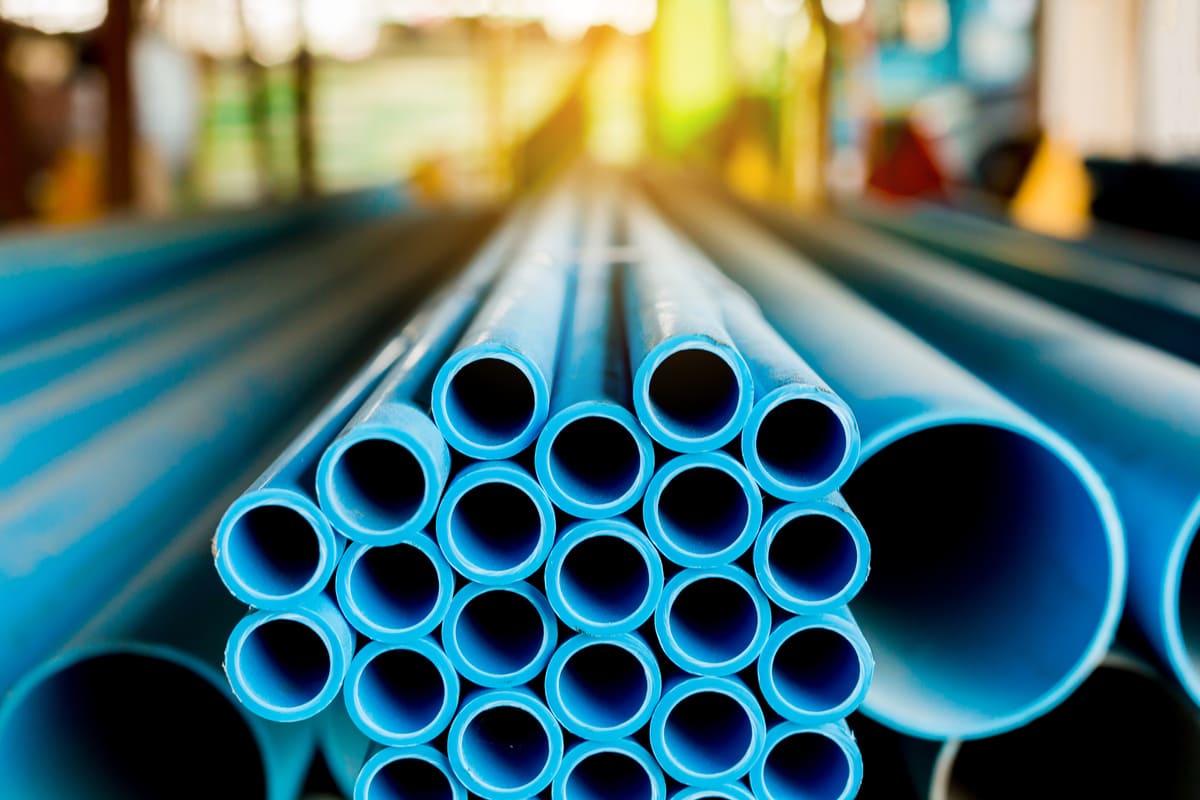
Unplasticized formulation. High strength, stiffness, and chemical resistance. Used for pipes, conduit, siding, window profiles. Dominant form in construction applications.
Polyvinyl chloride (PVC) is a versatile and widely used thermoplastic, known for its durability, chemical resistance, and waterproof nature. First discovered in 1872 and commercialized in the 1920s-1930s, PVC material has become the world's third most produced plastic after polyethylene and polypropylene.
The polymer contains 57% chlorine by weight, giving it unique properties including inherent flame retardancy and excellent chemical resistance. As a PVC resin distributor, Formerra provides access to both rigid and flexible formulations optimized for construction, electrical, medical, and industrial applications.
PVC occupies a strategic position as a commodity thermoplastic alongside polyethylene, polypropylene, and polystyrene. Commodity thermoplastics offer low cost and easy processing with moderate heat resistance (continuous use temperatures 50-100°C) and good mechanical properties for general-purpose applications.
Within the commodity tier, PVC plastic distinguishes itself through exceptional chemical resistance to acids, alkalis, and aqueous solutions, inherent flame retardancy from chlorine content, and near-zero water absorption, making it ideal for plumbing, electrical insulation, and chemical-resistant applications where other commodity plastics would fail.
The material exists in two main forms determined by plasticizer content:
PVC demonstrates exceptional durability and longevity in service. Properly formulated compositions resist degradation, corrosion, and biological attack. For example, underground PVC pipe material demonstrates 50-100 year service life in potable water distribution systems. The waterproof nature with near-zero water absorption (<0.1%) makes PVC ideal for plumbing, drainage, and outdoor applications without dimensional changes from moisture exposure.
Chemical resistance outperforms most commodity thermoplastics, providing reliable performance in corrosive environments for chemical tanks, process equipment, and industrial piping.
Common PVC applications span construction (pipes, siding, windows), electrical (wire and cable insulation), medical (tubing, blood bags, IV bags), flooring, packaging, and consumer goods. The combination of low cost, chemical resistance, flame retardancy, and formulation flexibility has made PVC one of the most widely used polymers globally. Processing includes extrusion for pipes and profiles, injection molding for fittings and consumer goods, calendering for sheet and film, and specialized techniques for specific product forms.
40-60 MPa (rigid),
10-25 MPa (flexible)
2,400-4,100 MPa (rigid),
10-50 MPa (flexible)
60-110 MPa (rigid),
N/A (flexible)
2,200-3,700 MPa (rigid), N/A (flexible)
10-50% (rigid),
200-400% (flexible, plasticizer dependent)
20-100 J/m (rigid, impact-modified grades higher),
No break (flexible)
D65-85 (rigid),
A50-95 (flexible, plasticizer dependent)
Moderate (rigid), significant (flexible)
55-70 °C (rigid),
50-85 °C (flexible, formulation dependent)
60-82 °C at 0.46 MPa (rigid)
75-105 °C (composition dependent)
~212 °C (low crystallinity, broad melting range)
160-200 °C (care required to prevent HCl degradation)
50-100 x 10⁻⁶/°C (rigid),
70-250 x 10⁻⁶/°C (flexible)
0.14-0.28 W/(m·K)
<0.1% in 24 hours. Essentially waterproof. Moisture pickup negligible. No pre-drying required for most processing operations. Dimensional stability unaffected by humidity exposure.
Excellent resistance to acids, alkalis, alcohols, oils, and aqueous solutions at room temperature. Good resistance to aliphatic hydrocarbons. Poor resistance to ketones, esters, chlorinated solvents, and aromatic hydrocarbons. PVC plastic shows superior chemical resistance to most commodity thermoplastics including polyethylene, polypropylene, and polystyrene.
Poor without UV stabilizers. Yellowing, chalking, and embrittlement occur over extended outdoor exposure. Titanium dioxide (white pigment) and UV absorbers significantly improve outdoor performance. Weatherable grades available for exterior applications including siding and window profiles.
Excellent resistance to hot water and steam sterilization at moderate temperatures. Medical-grade PVC material withstands gamma radiation and ethylene oxide (EtO) sterilization without significant property degradation. Long-term exposure to boiling water does not cause hydrolytic breakdown.
Moderate susceptibility to environmental stress cracking when exposed to ketones, esters, and plasticizers incompatible with base formulation. Aromatic solvents cause swelling and stress cracking under load. Plasticizer migration in flexible grades creates internal stress over time.
12-40 kV/mm (formulation dependent)
3.0-4.5
10¹³-10¹⁶ ohm·cm
10¹²-10¹⁵ ohm/sq
Naturally insulating. Widely used as electrical insulation for wire and cable applications in building wiring and power distribution.
V-0 to V-2 (inherent flame retardancy due to 57% chlorine content)
Above 450 °C
Combustion produces HCl gas, CO₂, CO, and potentially dioxins under certain conditions. Smoke density high. Significant toxicity concerns in fire scenarios requiring adequate ventilation and fire suppression systems.
0.4-0.5 static, 0.3-0.4 dynamic (rigid), 0.5-0.8 (flexible, plasticizer dependent)
Moderate wear resistance. Not typically used for bearing applications. Better suited for static sealing, gasket applications, and low-speed sliding contacts.
Surface finish capability
Good to excellent surface finish depending on formulation and processing. Rigid grades produce smooth, glossy surfaces. Flexible grades range from matte to glossy based on plasticizer content. Opaque in standard formulations. Clear rigid PVC available with reduced haze for packaging applications. Replicates mold textures and patterns effectively.
Sink/warpage/visible defects tendency
Minimal sink marks in rigid grades due to low shrinkage (0.2-0.5%). Warpage risk increases with uneven wall thickness and inadequate cooling. Gate location and venting critical for avoiding weld lines and trapped air. Rigid formulations dimensionally stable. Flexible grades show minimal shrinkage but greater thermal expansion.
Colorability
Excellent color range via masterbatch or dry blending with pigments. White formulations dominate construction applications using titanium dioxide. Deep, vibrant colors achievable. Natural color is yellowish. Heat stability of pigments critical to prevent degradation during processing at 160-200 °C.
Color stability
Good indoors with proper stabilization. Fair to poor outdoors without UV stabilizers. Yellowing occurs over time, especially with heat exposure. Titanium dioxide improves color stability in white formulations. Heat-stable pigments required to maintain color integrity during processing and long-term exposure.
Optical properties
Naturally opaque in standard formulations. Clear rigid PVC available for packaging and display applications with 80-85% light transmission. Refractive index approximately 1.54. Flexible grades typically opaque to translucent. Not suitable for high-clarity optical applications requiring transparency comparable to polycarbonate or acrylic.
Scratch/chemical mar resistance notes
Moderate scratch resistance in rigid grades. Flexible formulations more resistant to visible scratching due to plasticizer content. Excellent resistance to household chemicals, oils, and aqueous solutions. Attacked by ketones, esters, and aromatic solvents causing surface marring and stress cracking.
Marking methods
Screen printing, pad printing, hot stamping, and digital printing all effective on PVC material. Laser marking produces permanent marks on most formulations. Embossing and debossing produce clean features. In-mold labeling supported for rigid applications. Surface preparation minimal for most printing technologies.
Coating/painting/plating suitability
Good paint adhesion with proper surface preparation and compatible primers. Powder coating supported for rigid profiles. Plasticizer migration in flexible grades complicates long-term paint adhesion. Metallization through vacuum deposition produces decorative finishes. Not typically electroplated unlike ABS.
Joining methods
Solvent welding (solvent cementing) primary method for rigid PVC pipe and fittings, creating permanent chemical bonds. Heat welding (hot air, hot plate) effective for sheet and membrane applications. Ultrasonic welding supported for thin-wall parts. Adhesive bonding with cyanoacrylate, epoxy, and structural adhesives. Mechanical fastening with threaded inserts and self-tapping screws. Fusion bonding for medical tubing.

Polyvinyl chloride (PVC) is a commodity thermoplastic distinguished by its 57% chlorine content by weight, giving it unique properties compared to other commodity plastics. PVC sits in the commodity tier alongside polyethylene, polypropylene, and polystyrene, offering low cost and easy processing with moderate heat resistance (continuous use 55-70 °C).
What sets PVC material apart from other commodity thermoplastics is its inherent flame retardancy from chlorine content, achieving V-0 to V-2 UL94 ratings without additional flame retardant additives. PVC demonstrates exceptional chemical resistance to acids, alkalis, oils, and aqueous solutions, outperforming polyethylene, polypropylene, and polystyrene in corrosive environments.
Near-zero water absorption (<0.1%) makes PVC waterproof with no dimensional changes from moisture exposure. The material transforms from rigid to flexible through plasticizer addition, enabling applications ranging from structural pipes to soft medical tubing with a single base polymer. This formulation versatility, combined with durability and cost-effectiveness, has made PVC the world's third most produced plastic after polyethylene and polypropylene.
PVC grades fall into two main categories based on plasticizer content:
Within these categories, impact-modified grades add acrylic or MBS (methacrylate-butadiene-styrene) modifiers to improve low-temperature toughness and impact resistance, particularly for pipe applications in cold climates. In addition, specific formulations address a wide range of application needs:
PVC demonstrates exceptional chemical resistance to acids, alkalis, alcohols, oils, and aqueous solutions at room temperature, outperforming most commodity thermoplastics. It also shows excellent resistance to sulfuric acid, hydrochloric acid, nitric acid (dilute), sodium hydroxide, potassium hydroxide, and mineral oils. Good resistance to aliphatic hydrocarbons enables use in fuel transport and storage applications.
Poor resistance occurs with ketones (acetone, MEK), esters (ethyl acetate), chlorinated solvents (methylene chloride, chloroform), and aromatic hydrocarbons (benzene, toluene) which cause swelling and stress cracking. Strong oxidizing agents attack PVC over time, and its chemical resistance decreases at elevated temperatures above 50 °C.
Moisture resistance is outstanding with water absorption below 0.1% in 24 hours. PVC material is essentially waterproof with no dimensional changes from humidity exposure. This property makes PVC ideal for plumbing, drainage, and outdoor applications. Medical-grade formulations withstand hot water and steam sterilization at moderate temperatures.
UV resistance is poor without stabilizers. Unprotected PVC yellows, chalks, and embrittles over extended outdoor exposure. Titanium dioxide (white pigment) provides significant UV protection, making white PVC formulations suitable for exterior applications. UV absorbers and hindered amine light stabilizers (HALS) further improve weatherability. Weatherable grades demonstrate acceptable outdoor performance for 10-20 years in siding and window applications. Dark colors and clear formulations show faster UV degradation than white formulations.
Yes, both food-contact and medical-grade PVC formulations are available with specific regulatory approvals and performance requirements.
Food-contact grades comply with FDA regulations (21 CFR 177.1975 for rigid PVC, 21 CFR 177.2600 for flexible PVC) for direct food contact in packaging, food processing equipment, and conveying systems. These formulations use approved additives including heat stabilizers (calcium-zinc, organotin), lubricants, and plasticizers (when used in flexible grades) that meet migration limits for food safety. Applications include food packaging film, blister packaging, cling wrap, conveyor belts, and tubing for beverage and food processing.
Medical-grade PVC material meets USP Class VI biocompatibility requirements for medical device applications. These formulations undergo rigorous testing for cytotoxicity, sensitization, and irritation.
Flexible medical PVC dominates applications including IV bags, blood bags, medical tubing, oxygen masks, and dialysis equipment. Non-phthalate plasticizers (DEHP alternatives like DINCH, TOTM, DEHT) address regulatory restrictions and health concerns about phthalate migration in medical devices, particularly for neonatal and pediatric applications.
Medical grades withstand gamma radiation sterilization (25-50 kGy), ethylene oxide (EtO) sterilization, and steam sterilization at moderate temperatures without significant property degradation. Transparent medical-grade formulations enable visual monitoring of fluid flow in IV sets and blood collection systems.
Rigid medical PVC serves in connectors, fittings, and housings for medical equipment. All medical-grade formulations require careful control of extractables and leachables to ensure patient safety during extended contact with blood and bodily fluids.
PVC carries recycling code 3 and presents both opportunities and challenges in recycling infrastructure.
Rigid PVC (pipes, profiles, fittings) demonstrates better recyclability than flexible PVC due to simpler formulation and lack of plasticizer migration concerns. Post-industrial scrap from pipe and profile extrusion achieves recycling rates of 50-80% in closed-loop manufacturing systems where material composition is controlled and contamination minimal.
Clean rigid PVC regrind reprocesses successfully at 10-25% blends with virgin material for non-critical applications. Post-consumer rigid PVC from construction and demolition waste recycling programs recovers material from window frames, pipes, and siding for downcycling into lower-grade applications including traffic cones, garden hoses, and non-pressure pipe.
On the other hand, flexible PVC recycling faces greater challenges due to plasticizer content, diverse formulations, and contamination with other polymers. Plasticizer migration during use and storage complicates reprocessing and limits application options. Separation from mixed plastic waste streams requires density-based or optical sorting technologies. Contamination with PET (both density ~1.4 g/cm³) in bottle recycling streams creates quality issues.
Chemical recycling technologies under development aim to recover vinyl chloride monomer or convert PVC to other chemicals, though economic viability remains uncertain.
Mechanical recycling infrastructure for PVC exists primarily in Europe through Vinyl Plus and similar programs. Environmental concerns about chlorine content, legacy phthalate plasticizers, and potential dioxin formation during improper incineration complicate end-of-life management.
Responsible disposal requires avoiding uncontrolled burning and utilizing appropriate waste-to-energy facilities with emission controls. Material selection should consider regional recycling capabilities and end-of-life requirements, particularly for single-use medical and packaging applications where recycling infrastructure is limited.
If you need some extra guidance in finding the right product, fill out the form and our team will be in touch shortly.
Contact UsDiscover the full range of high-quality products on the upgraded Formerra+ online experience.
Visit Formerra+Sources
PVC Properties and Processing Guide. Vinyl Institute. 2024. https://www.vinylinfo.org/
Polyvinyl Chloride (PVC) Technical Data. Plastics Europe. 2025. https://www.plasticseurope.org/
PVC Recycling and Sustainability. Vinyl Plus. 2024. https://www.vinylplus.eu/